
Imagine walking into a shop and being told to leave before you reach the counter. Was that a business owner using a lawful right, or was it discrimination? Customers who are turned away unfairly can lose dignity, time, and money, and owners who refuse for the wrong reason can face complaints and lawsuits. Learning when is refusing service legal and when is it discrimination helps you know where the line sits.
In the United States, most businesses that are open to the public can choose who they serve, but that freedom has clear limits. Federal and state civil rights laws protect people from being refused service because of who they are. This guide explains those limits in plain language: which refusals are usually lawful, which ones can count as discrimination, and what to do if it happens to you.
When is refusing service legal and when is it discrimination? Refusing service is usually legal when it is based on a customer’s behaviour, a neutral safety or dress rule, or a lack of capacity, and it is applied to everyone equally. It can be discrimination when the real reason is a protected trait such as race, sex, religion, disability, or national origin. LawBattlefield.com provides general information only, not legal advice for any specific case.
The Basic Rule: Businesses Can Choose Their Customers, With Limits
A private business is not the government, and in general it does not have to serve everyone who walks through the door. A restaurant can refuse a shouting customer, a shop can ask a thief to leave, and a hotel can turn away someone who cannot pay. The right to refuse service is real, but a sign saying so does not override civil rights law.
The key question is always the reason for the refusal. When is refusing service legal and when is it discrimination is decided by looking at why the person was turned away, not by what the sign on the door says. If the reason is behaviour that any customer would be refused for, the refusal is usually lawful. If the reason is the customer’s race, religion, sex, disability, or another protected trait, the refusal can be unlawful even if the business claims it was about something else.
What the Law Means by a Public Accommodation
Most of the rules in this guide apply to places called public accommodations. A public accommodation is a business or facility that is open to the public, such as a restaurant, hotel, shop, theatre, gym, or doctor’s office. Federal law, mainly Title II of the Civil Rights Act of 1964 and Title III of the Americans with Disabilities Act, sets the minimum protections for these places. Many states and cities add their own public accommodation laws, and those often cover more types of businesses and more protected groups.
Some places are not public accommodations in the same way. A private club that genuinely limits membership, or a small private gathering in a home, is treated differently. If a business holds itself out as open to everyone, it should expect the law to treat it that way.

When Refusing Service Is Legal
There are many ordinary situations where refusing service is legal. A business can refuse a customer who is drunk and disorderly, threatening staff, harassing other customers, or damaging property. It can refuse someone who will not follow a reasonable safety rule, such as wearing shoes in a restaurant. It can also refuse a person who cannot pay or who asks for a service the business does not offer.
A business can also refuse service when it is full or when the customer arrives after closing. The common thread is that the reason is neutral and applies to anyone in the same situation. A clear, written policy that staff apply in the same way to every customer is the strongest sign that a refusal was lawful.
When Refusing Service Becomes Discrimination
A refusal becomes discrimination when the real reason is a protected characteristic rather than the customer’s behaviour. That can be obvious, such as a sign or a statement that members of a certain race or religion are not welcome. More often it is subtle: a customer is told the restaurant is full while other tables sit empty, or a person is asked for extra identification that nobody else is asked for. Courts and civil rights agencies look at the pattern, the timing, and whether other customers were treated differently.
Discrimination can also happen through a rule that looks neutral but hits one group much harder than others, such as a strict no-head-coverings rule applied to people whose religion requires one. This is the heart of when is refusing service legal and when is it discrimination: looking past the stated reason and asking whether a protected trait explains the treatment.
Protected Classes Under Federal Law
Federal law does not protect every personal trait, but it protects several important ones. Under federal public accommodation law, businesses generally cannot refuse service because of race, colour, religion, or national origin. The Americans with Disabilities Act adds disability, and requires reasonable changes to policies so that people with disabilities can use the service. Sex discrimination in public accommodations is covered by some federal laws in specific settings, such as education and housing, and by many state laws more broadly.
Federal protection in shops and restaurants is narrower than many people expect, which is why state and local laws matter so much. Many states also protect sex, sexual orientation, gender identity, age, and marital status, so a refusal that is lawful under federal law can still be unlawful locally. That is why knowing when is refusing service legal and when is it discrimination matters in everyday situations.
| Situation | Usually legal? | Why |
|---|---|---|
| Customer shouting at staff | Yes | Based on behaviour, applied to anyone |
| Customer cannot pay | Yes | Neutral business reason |
| Refused because of race | No | Protected class under federal law |
| Refused because of disability | No | ADA requires reasonable accommodation |
| Refused for not following a dress code | Usually yes | Must apply equally to everyone |
| Refused for a religious head covering | Often no | May need a reasonable exception |

State Laws That Go Further Than Federal Law
State civil rights laws often give customers more protection than federal law does. California, New York, Illinois, and many other states ban refusal of service based on sex, sexual orientation, gender identity, and other traits in nearly all public businesses. Because the rules change from state to state, the law where the business sits decides the case.
Local city and county ordinances can add yet another layer, and a city may create a local human rights commission where complaints can be filed for free. Before deciding whether a refusal was unlawful, check the state and local rules as well as the federal ones.
Refusing Service and the First Amendment
Some of the hardest cases involve a business owner who says that serving a customer would go against their religious beliefs or freedom of speech. The Supreme Court has dealt with this in cases about wedding cakes and custom-designed websites, and the results have been narrow and fact-specific. A court may treat a highly customised, expressive service differently from a standard product off the shelf.
This area of law is still developing, and the outcome often depends on the exact facts and the state law involved. If a refusal involves a claim of religious freedom or free speech, both sides should get legal advice rather than relying on headlines.
Service Animals, Disabilities, and the ADA
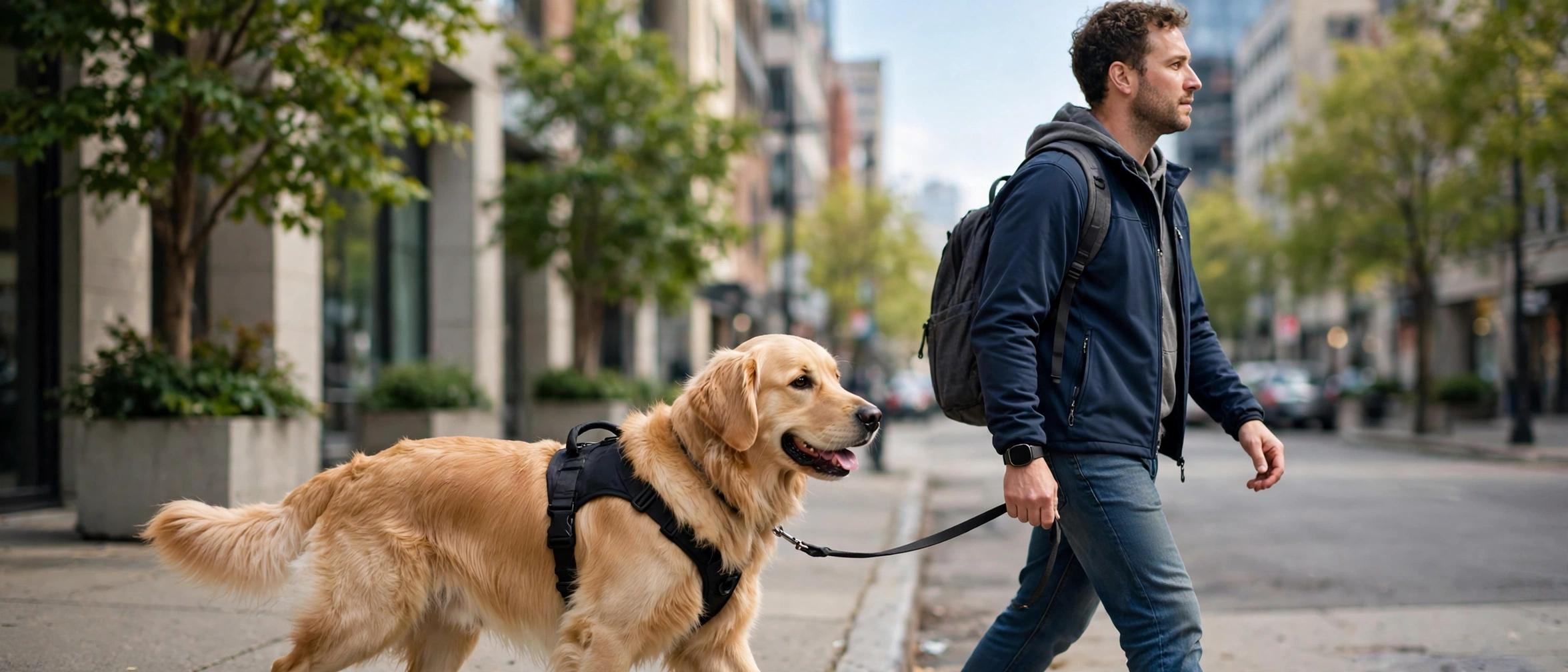
Disability rules deserve special attention because they cause some of the most common disputes. Under the Americans with Disabilities Act, a business that is open to the public must generally allow a person with a disability to be accompanied by a service animal, even where pets are not allowed. Staff may ask only two questions: whether the animal is needed because of a disability, and what task it has been trained to perform. They may not ask for proof, certification, or a demonstration of the task.
The ADA also requires reasonable changes to policies when a person with a disability needs one, such as allowing a companion to help or offering an alternative way to order. A business can refuse service if the animal is out of control or poses a direct threat, but that decision must be based on real behaviour, not on assumptions about disability. The ADA guidance on service animals explains these rules in detail.
Dress Codes, Behaviour Rules, and Safety Policies
Dress codes and behaviour rules are lawful when they are clear, written down, and applied to everyone in the same way. Problems arise when a rule is enforced only against some customers, or when it conflicts with a religious practice or a disability need. In those cases, the business should consider a reasonable exception unless it would cause a real hardship or a safety risk.
Safety policies work the same way. A business can refuse service to protect staff and customers, for example by limiting entry during a disturbance. But safety cannot be used as a cover for bias: if the same behaviour is accepted from one customer and punished in another, the safety explanation will not hold up.
What To Do If You Believe You Were Refused Service Unfairly
If you believe you were turned away because of who you are, take a few calm steps as soon as you can. Knowing when is refusing service legal and when is it discrimination helps you act quickly, so follow these steps in order and keep copies of everything.
- Write down what happened. Record the date, time, place, the names of staff involved, and the exact words used, while the details are fresh.
- Keep any evidence. Save receipts, messages, photos, or video, and note the names of any witnesses who saw what happened.
- Ask for the reason in writing. A short, polite request for the business’s reason can be useful, and a refusal to explain can itself be telling.
- Complain to the business in writing. Give the manager or owner a chance to respond, and keep a copy of your complaint and any reply.
- Contact a civil rights agency. Your state or local human rights commission, or the Civil Rights Division of the U.S. Department of Justice, can explain how to file a complaint and what the deadlines are.
- Do not wait too long. Complaint deadlines can be as short as 180 days, so start the process promptly even if you are still deciding about a lawsuit.

What Business Owners Should Do Before Refusing Service
Business owners can protect themselves and their customers by having a clear, written refusal policy and training staff to use it. The policy should list the behaviour that leads to refusal, such as threats, harassment, or refusal to pay, and it should say that service is never refused because of race, religion, sex, disability, or any other protected trait. Staff should be trained to stay calm, to explain the reason briefly, and to offer an alternative where one exists, such as takeaway instead of dining in.
Good records help too. A short note of what happened, who was present, and why service was refused can resolve a dispute months later. If a customer raises a discrimination concern, the owner should take it seriously and consider whether an apology, a refund, or a change in the policy is appropriate.
Common Mistakes People Make About Refusal of Service
The first mistake is believing that a “right to refuse service” sign allows any refusal at all. The sign describes a real right, but it does not override civil rights law, and a court will look at the real reason for the refusal. The second mistake is assuming that discrimination must be shouted or written down. Most discrimination cases are built on comparison: how this customer was treated compared with others in the same situation.
The third mistake is thinking that only the federal government can act. In practice, state and local agencies handle most public accommodation complaints, and they are often faster to reach. The fourth mistake is waiting too long: evidence fades and complaint deadlines pass.
Conclusion
When is refusing service legal and when is it discrimination comes down to one question: was the person turned away for what they did, or for who they are? Behaviour, safety, and neutral rules applied to everyone are usually lawful reasons. A protected trait, a rule enforced only against some people, or a policy that hits one group hardest is where the law steps in. The question of when is refusing service legal and when is it discrimination is answered by the reason, not the sign. If you were refused service and you suspect discrimination, write down what happened, keep your evidence, and contact a civil rights agency promptly. If you run a business, put your policy in writing, train your staff, and apply it the same way to every customer. That is how both sides stay on the right side of the line.
FAQs
Can a business legally refuse service to anyone?
No. A business can refuse service for neutral reasons such as bad behaviour or inability to pay, but it cannot refuse service because of a protected trait like race, religion, or disability.
Is a “we reserve the right to refuse service” sign legally binding?
The sign reflects a real right, but it does not override civil rights law. A court looks at the actual reason for the refusal, not at what the sign says.
What should I do if I am refused service because of my race?
Write down what happened, keep any evidence and witness names, complain to the business in writing, and contact your state civil rights agency promptly, as deadlines can be short.
Can a restaurant refuse service to someone with a service animal?
Usually no. Under the ADA, businesses open to the public must generally allow service animals, and staff may only ask two limited questions about the animal.
Can a business refuse service for not following a dress code?
Yes, if the dress code is clear, written, and applied equally to everyone. It may need a reasonable exception for religious dress or a disability need.
Disclaimer: This article is for general information only and does not provide legal advice. LawBattlefield.com is not a law firm. It is not paid promotion.
Was this article helpful? Check out more on Lawbattlefield.com.
Can I Refuse To Go To A Lawsuit? What Really Happens If You Ignore It