When a serious crime is charged in the United States, the case is usually brought not by the victim but by a government lawyer called a district attorney. The district attorney, often shortened to DA, decides whether charges are filed, what those charges are, and how the case is argued in court. If you have ever watched a criminal trial on the news and wondered who the lawyer for the state is, the answer is usually the district attorney or someone on their team.
So, what is a district attorney in plain terms? A district attorney is a locally elected public official who prosecutes criminal cases on behalf of the state. LawBattlefield.com provides general information only, not legal advice about any specific case. This guide explains what a district attorney does, how the job works, what powers the office holds, and how a DA differs from a prosecutor, a defense attorney, and an attorney general. It also explains when you might need to contact the office and what to expect if you do.
The Short Answer: A District Attorney Prosecutes Crime for the Public
A district attorney is the chief prosecutor for a local area, usually a county or a judicial district made up of one or more counties. The DA represents the government — the people of the state — in criminal cases. When police arrest someone, it is the district attorney’s office that reviews the evidence and decides whether to bring formal criminal charges.
The victim of a crime does not hire the district attorney, and the victim cannot order the DA to file or drop charges. The DA works for the public, not for any one person. That is an important difference from a private lawyer, who works for the client who hired them. A district attorney’s client, in effect, is the community and the state — and that public role is the simplest answer to what is a district attorney.
What Does a District Attorney Do Day to Day
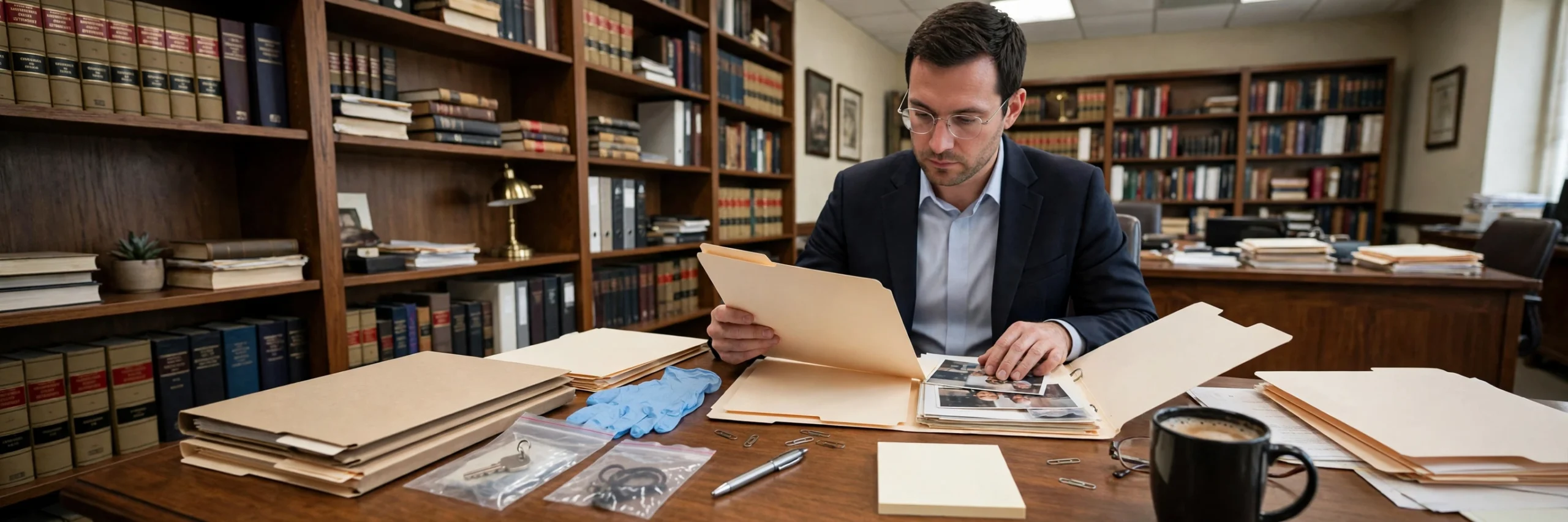
People often picture a district attorney only in the courtroom, but much of the work happens before a case ever reaches a judge. When police finish an investigation, they send the evidence to the DA’s office. A prosecutor reviews police reports, witness statements, lab results, and video to decide whether there is enough evidence to charge someone with a crime.
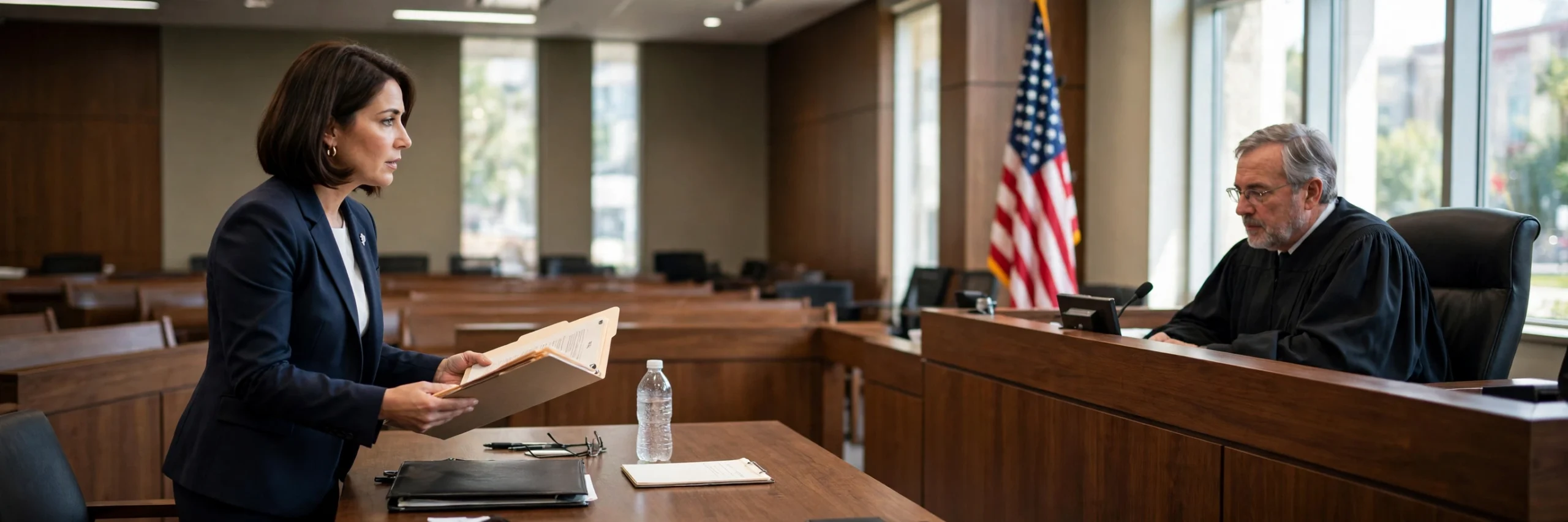
If charges are filed, the DA’s team prepares the case: interviewing witnesses, working with investigators, and deciding which charges fit the facts. Prosecutors also appear in court for arraignments, bail hearings, pretrial motions, plea negotiations, trials, and sentencing hearings. They argue that the defendant committed the crime and ask the court for a fair penalty under the law.
District Attorney vs Prosecutor: Is There a Difference?
The question of district attorney vs prosecutor confuses many people, because the two terms are often used as if they mean the same thing. In most places they are closely related but not identical. A prosecutor is the general job title for any government lawyer who brings criminal charges. A district attorney is a specific kind of prosecutor: the elected chief prosecutor of a county or district.
| Role | Who they work for | What cases they handle |
|---|---|---|
| District attorney | County or judicial district | State criminal cases in that area |
| Assistant district attorney | The district attorney’s office | State criminal cases assigned by the DA |
| United States Attorney | Federal government | Federal criminal cases |
| Attorney general | State government | Statewide cases, appeals, and civil matters |
| Defense attorney | The accused person | Defending people charged with crimes |
How District Attorneys Are Chosen: Election and Appointment
How are district attorneys elected? In most states, voters elect their district attorney directly. The National District Attorneys Association is the professional body for district attorneys in the United States. Candidates run for office, campaign in the county, and serve a term set by state law, commonly four years. This makes the DA one of the few prosecutors in the world chosen by popular vote, and it means local voters have a real say in how criminal justice works where they live.
A few states do things differently. In some, the governor or another official appoints the chief prosecutor, and in a small number the job is filled by appointment rather than election. The exact rules, term lengths, and eligibility requirements vary by state, so the details depend on where you live.
The Powers of a District Attorney
District attorney duties and powers are wide, and they begin before any charge is filed. The most important power is charging discretion: the DA decides whether to charge a person, which charges to bring, and whether to offer a plea deal. Prosecutors can also decide to decline a case if the evidence is weak or if prosecution would not serve the interests of justice. This discretion is the most important part of what is a district attorney in practice.
The DA’s office also has the power to investigate. Prosecutors work with police, request search warrants through the courts, and in some places use a grand jury to gather evidence and decide whether serious charges should be filed. In addition, the office may run special units for crimes such as domestic violence, fraud, or drug trafficking. At the federal level, the equivalent role is the United States Attorney, whose work is described by the U.S. Department of Justice.

What a District Attorney Cannot Do
A district attorney cannot decide whether someone is guilty. Only a judge or a jury can do that after a trial, or a defendant can admit guilt by pleading guilty. The DA presents the case, but the verdict belongs to the court. This is a basic protection in the criminal justice system.
A DA also cannot investigate or prosecute every crime. The office handles state crimes in its own district. Federal crimes go to federal prosecutors, and crimes in another county go to that county’s DA. A district attorney also cannot act as a private lawyer for a victim or give legal advice to members of the public about their own cases.
Can a District Attorney Drop Charges?
Yes — and that power is part of what is a district attorney in action. The DA can drop charges at almost any point before a trial ends, and this happens for several reasons. The DA can drop charges at almost any point before a trial ends, and this happens for several reasons. The evidence may be too weak, a key witness may be unavailable, or new information may show that the person did not commit the crime.
Sometimes charges are dropped as part of a deal. A defendant may agree to complete a diversion program, pay restitution, or cooperate in another case, and the DA agrees to dismiss the charges if the conditions are met. In other cases the DA may reduce a charge to a less serious offence instead of dropping it entirely.
District Attorney vs Attorney General: How the Roles Differ
District attorney vs attorney general is another common point of confusion. Both are prosecutors, but they work at different levels. A district attorney handles criminal cases in one county or district. An attorney general is the chief legal officer for an entire state, overseeing statewide legal matters, consumer protection, and sometimes criminal appeals.
The attorney general usually does not handle everyday local criminal cases. Those belong to the DA. But the attorney general may step in for cases that cross county lines, involve state officials, or raise issues of statewide importance. The attorney general also defends the state in civil lawsuits and gives legal advice to state agencies.
In some states the attorney general can take over a local case if the district attorney has a conflict of interest or asks for help. In others, the attorney general has limited power over local prosecutions. The balance between the two offices depends on the state’s constitution and laws.
District Attorney vs Defense Attorney: Opposite Sides of the Courtroom
In a criminal trial, the district attorney and the defense attorney sit on opposite sides, and their jobs are very different. The DA argues that the defendant committed the crime and must prove it beyond a reasonable doubt — the courtroom side of what is a district attorney. The defense attorney protects the rights of the accused person, challenges the prosecution’s evidence, and argues for acquittal or a lighter outcome.
A defense attorney works for one client: the person charged. A district attorney works for the public. That difference shapes everything about how each lawyer prepares. The defense lawyer’s duty is to their client alone, while the prosecutor’s duty is to seek justice, which includes dropping a case if the evidence shows the person is innocent.
How a Criminal Case Moves Through the District Attorney’s Office
Understanding the steps of a case helps explain what a district attorney actually does from arrest to resolution. The process follows a familiar pattern in most states, although the names of hearings and the exact order can vary.
- Arrest and police report. Police investigate a suspected crime, make an arrest if they have cause, and send a report to the DA’s office.
- Charging decision. A prosecutor reviews the evidence and decides whether to file charges, what charges fit, or whether to decline the case.
- Arraignment. The defendant appears in court, hears the charges, and enters a plea. Bail may be set at this stage.
- Pretrial stage. Both sides exchange evidence, file motions, and often discuss a plea deal. Most cases end here with a negotiated plea.
- Trial. If no deal is reached, the case goes to trial, where the DA must prove guilt beyond a reasonable doubt.
- Sentencing. If the defendant is convicted or pleads guilty, the judge decides the sentence, after hearing from both sides and sometimes from the victim.
- Appeal. A convicted person can appeal, and the DA’s office may defend the conviction in a higher court.

How to Contact Your District Attorney’s Office
If you need to contact the district attorney’s office, start with the office’s website or the county government directory. Most offices list a main phone number, a victim services line, and information about how to report a crime or check the status of a case. You can also find the office address through your county courthouse.
Victims of crime should ask for the victim advocate or victim services unit. Advocates can explain court dates, help with victim impact statements, and connect you with support services. If you have information about a crime, you can usually report it to the police first, and the police will pass it to the prosecutor if charges are possible.
Common Mistakes People Make About District Attorneys
One common mistake is thinking the district attorney works for the victim. The DA represents the state, and while victims’ views matter, the office can proceed with a case even if the victim asks for charges to be dropped. The reverse is also true: a victim cannot make the DA file charges if the evidence is not there.
Another mistake is assuming the DA decides guilt. The prosecutor argues the case, but a judge or jury decides the verdict. A related misunderstanding is thinking that being charged means being convicted. A charge is only an accusation, and every defendant is presumed innocent until proven guilty.
People also confuse the DA with the police. Police investigate and arrest, but they do not file criminal charges. That decision belongs to the prosecutor. Finally, many people assume all prosecutors are the same. In fact, district attorneys, federal prosecutors, and attorneys general have different jobs, different bosses, and different kinds of cases.
Conclusion
The answer to what is a district attorney is straightforward: the DA is the elected chief prosecutor for a county or district, responsible for deciding which criminal cases are charged and for arguing those cases on behalf of the state. The office reviews police evidence, works with victims, negotiates plea deals, and tries cases in court. Its powers are wide but limited by the constitution, the courts, and the duty to seek justice rather than simply to win.
FAQs
What is a district attorney in simple terms?
A district attorney is the elected chief prosecutor for a county or district. The DA decides whether to file criminal charges and argues those cases in court on behalf of the state and the public.
Is a district attorney the same as a prosecutor?
Every district attorney is a prosecutor, but not every prosecutor is a district attorney. The DA is the elected head of the local prosecutor’s office, while assistant district attorneys and federal prosecutors are other kinds of prosecutors.
How are district attorneys elected?
In most states, voters elect their district attorney for a fixed term, usually four years. A few states appoint the chief local prosecutor instead, so the exact method depends on state law.
Can a district attorney drop charges?
Yes. A district attorney can drop charges if the evidence is weak, a witness is unavailable, or new information shows the person did not commit the crime. The victim cannot force the DA to drop or keep charges.
What is the difference between a district attorney and an attorney general?
A district attorney handles criminal cases in one county or district. An attorney general is the chief legal officer for the whole state, handling statewide matters, appeals, and civil cases for the state.
Disclaimer
This article is for general information only and does not provide legal advice. LawBattlefield.com is not a law firm. It is not paid promotion.
Was this article helpful?
Was this article helpful? Check out more on Lawbattlefield.com.