
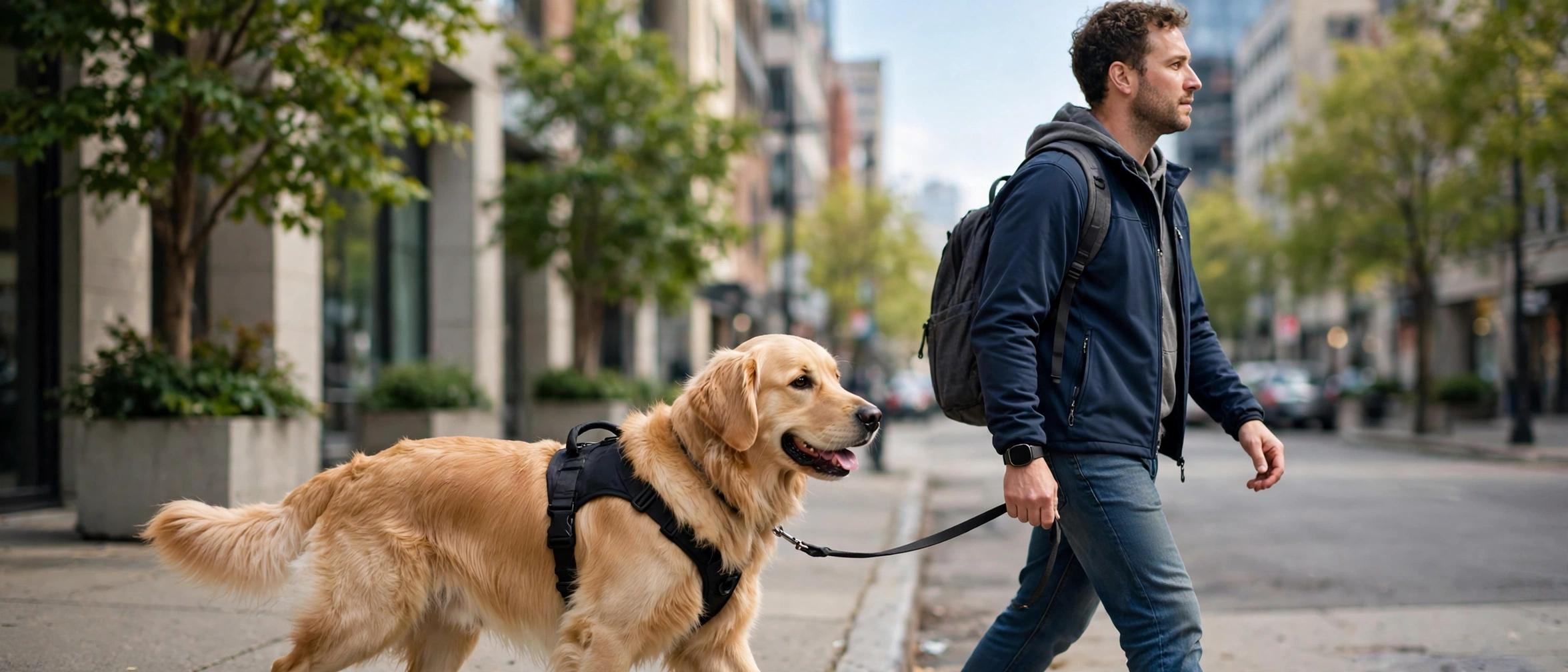
A customer walks into your shop with a dog. A guest asks whether they can bring their dog into a restaurant. A tenant says their dog is a service animal and asks to skip the pet deposit. In each case the same question comes up: can you legally ask for proof of service dog status? LawBattlefield.com provides general information only, not legal advice for any specific case.
The short answer is no, not in the way most people expect. Under the Americans with Disabilities Act (ADA), a business open to the public may ask only two specific questions, and it may not demand papers, a certificate, a vest, or a demonstration. But the rules change in housing and at work. This guide explains can you legally ask for proof of service dog status in plain English: what the ADA allows, what it forbids, and what to do when things go wrong.
This article is general information only, not legal advice. The rules differ between public places, housing, workplaces, and air travel, so always check which law covers your situation, and get advice from a qualified lawyer if a dispute is serious.
The Short Answer: Usually No
For a business or government office open to the public, the answer to can you legally ask for proof of service dog status is usually no. The ADA does not require service animals to be certified, registered, or licensed, and a business may not demand documentation as a condition of entry. There is no official register of service dogs.
That surprises many business owners, because it feels like anyone could claim their pet is a service dog. The law accepts that risk on purpose: people with disabilities should not have to prove their disability to buy groceries or eat in a restaurant. Protection for businesses comes from the two questions and the right to remove a dog that is out of control, not from paperwork.
What Counts as a Service Animal Under the ADA
Under the ADA, a service animal is a dog individually trained to do work or perform tasks for a person with a disability, and the task must be directly related to that disability. Examples: guiding a person who is blind, alerting a person who is deaf, pulling a wheelchair, or alerting to a seizure.
The definition is narrow. Any breed and any size of dog can be a service animal, and the owner can train their own dog — no professional programme is required. But the dog must be trained to do a specific task, not merely to provide comfort. A dog whose only job is to make its owner feel calmer is not a service animal under the ADA.

The Two Questions You Are Allowed to Ask
When it is not obvious that a dog is a service animal, staff at a business or government office may ask two questions, and only two. The U.S. Department of Justice sets them out on ada.gov: is the dog a service animal required because of a disability, and what work or task has it been trained to perform?
Those are the only questions allowed. Staff may not ask about the person’s disability, ask for medical documentation, ask the dog to demonstrate its task, or require an ID card or training certificate. If the need is obvious — for example, a dog guiding a person who is blind — staff should not ask at all. Handlers need carry no proof, and a business may not refuse entry because a handler cannot produce it. That is the full answer to can you legally ask for proof of service dog: two questions, and nothing more.
What You Cannot Ask For
The list of things a business cannot demand is long, and it is where businesses most often go wrong. A business may not request documentation that the dog is registered, licensed, or certified. It may not require the dog to wear a vest, harness, or other identification, although many handlers choose to use a vest. It may not charge extra fees or deposits for the service animal, even if it charges pet fees.
A business also may not separate a person with a service animal from other customers, or treat them less favourably — it cannot make them sit in a particular area, or refuse service in part of the shop. The handler is responsible for the dog’s care, including feeding and cleaning up. The Department of Justice explains these points in its service animals FAQ.
Service Dogs, Emotional Support Animals, and Therapy Dogs
Much confusion comes from mixing up three kinds of animal. A service dog is trained to perform a specific task for a person with a disability, and it may enter public places under the ADA. An emotional support animal provides comfort by its presence, but it is not trained to perform a task, so it is not a service animal and has no such right of access.
A therapy dog is different again: it provides comfort to other people, for example in hospitals or care homes, as part of a volunteer programme, and it has no public access rights under the ADA either. The distinction matters: a business may treat an emotional support animal as a pet, while it must allow a service dog. Housing is the main exception, where emotional support animals have stronger rights under the Fair Housing Act.
| Type of animal | Trained for a task? | Public access under the ADA? |
|---|---|---|
| Service dog | Yes, task related to a disability | Yes |
| Emotional support animal | No, comfort by presence only | No |
| Therapy dog | Yes, comfort for other people | No |
| Pet | No | No |
When a Business Can Ask a Service Dog to Leave
A business cannot refuse a service dog because another customer is allergic or afraid. But it can ask a handler to remove a service animal in two situations: if the dog is not housebroken, or if the dog is out of control and the handler does not take effective action. A dog that barks repeatedly, jumps on people, or wanders away may meet that test; a single bark does not.
If the dog is removed, the business must still serve the person without the dog, if possible. A business can also refuse a service animal if its presence would fundamentally change the nature of the business — a hospital may exclude a service dog from a sterile operating room, but not from a waiting room. Allergies and fear of dogs are not reasons to refuse one.

Rules for Restaurants, Shops, and Hotels
The same rules apply in restaurants, shops, hotels, theatres, and other places open to the public. A restaurant must allow a service dog in all areas where customers are normally allowed, even if the local health code bans animals where food is served — the ADA overrides the health code here. The dog may sit under the table or beside its handler.
Hotels may not charge a pet fee or cleaning deposit for a service dog, although the guest can be charged for damage the dog actually causes. Shops may not ask a handler to leave the dog outside, and staff should be trained to ask the two questions politely rather than demanding proof. Most ADA complaints about service dogs start with a member of staff who asked for the wrong thing. Whatever the setting, can you legally ask for proof of service dog comes down to the same two questions.
Service Dogs in Housing: Different Rules Apply
Housing is the one area where the answer to can you legally ask for proof of service dog status changes. Landlords are covered mainly by the Fair Housing Act, not the ADA, which covers both service animals and emotional support animals as reasonable accommodations. If the need is not obvious, a provider may ask for verification that the person has a disability and needs the animal because of it.
That verification usually takes the form of a letter from a healthcare professional, and the provider may not ask for a diagnosis or detailed medical records. Housing providers may not charge a pet deposit or pet rent for a service animal or an emotional support animal, but they can charge for damage it causes. They may also ask for proof of vaccinations if state or local law requires it. The key difference: in housing, some documentation may be requested; in a shop, it may not.
Service Dogs at Work and in School
Workplaces are covered by Title I of the ADA, which requires employers with 15 or more employees to provide reasonable accommodations that do not cause undue hardship. An employee who needs a service dog at work can ask for that accommodation, and the employer may ask for medical information to confirm the disability and the need for the dog — very different from the two-question rule in shops.
Schools are covered by a mix of laws, including the ADA, Section 504 of the Rehabilitation Act, and the Individuals with Disabilities Education Act. A student with a disability may have the right to bring a service animal to school, and the school may ask for information to arrange it, such as who handles the dog and where it stays during class. Parents should contact the school in writing and keep a record.
Fake Certificates and Online Registries
A quick search finds dozens of websites selling service dog certificates, ID cards, vests, and registration documents, often for a fee. These documents convey no rights under the ADA, and the Department of Justice does not recognise them as proof that a dog is a service animal. A business may not demand them, and a handler does not need them — but buying one does not make a pet into a service dog.
Fake certificates have made life harder for everyone. Businesses see them and assume they are required, or accept them and let pets in. Genuine handlers are sometimes asked to show a certificate they do not have. The honest position is simple: under the ADA, no certificate proves a dog is a service animal, and no business should ask for one. That is why can you legally ask for proof of service dog is answered with a no: no certificate exists to ask for. Some states fine people who misrepresent a pet as a service animal.
What to Do If You Are Refused Entry With a Service Dog
If you are a handler and a business refuses you entry, stay calm and explain the two-question rule in a few words. Many refusals come from staff who do not know the law, and a short explanation can fix the problem. If not, ask to speak to a manager, and note the business name, date, time, and staff names.
If the problem continues, you can complain to the U.S. Department of Justice, which enforces the ADA, or to your state or local civil rights agency. You can also speak to a disability rights lawyer, because the ADA allows people who have been discriminated against to bring a case. Keep receipts, photos, or messages showing what happened. For a business, train staff now: an ADA complaint costs far more than a few minutes of training.
Common Mistakes Businesses and Handlers Make
Businesses make three mistakes again and again: demanding proof, a certificate, or a vest, which the ADA forbids; asking about the person’s disability, also forbidden; and refusing entry because of allergies or another customer’s complaint — the law says both people must be accommodated, for example by seating them apart, not by removing the dog. Each mistake comes from misunderstanding can you legally ask for proof of service dog under the ADA.
Handlers make mistakes too: bringing a dog that is not trained or not under control and expecting the same treatment as a trained service dog; using a fake certificate to get a pet into a shop, which can lead to a fine under state law; and not knowing the rules change in housing and at work, where documentation can be requested. Knowing which law applies in each place avoids most disputes.
Conclusion
So, can you legally ask for proof of service dog status? In a shop, restaurant, hotel, or other public place, the answer is no: under the ADA, staff may ask only two questions, and they may not demand documents, a certificate, a vest, or a demonstration. In housing and at work, other laws allow a provider or employer to ask for verification of the disability and the need for the animal. Only service dogs have public access rights under the ADA.
If you run a business, train your staff on the two questions and the two reasons a dog can be removed. If you use a service dog, know your rights, keep your dog trained and under control, and keep a record if you are ever refused entry. Both sides do better knowing the rules before a problem happens.
FAQs
Can a restaurant ask for proof that a dog is a service dog?
No. Under the ADA, a restaurant may ask only two questions: whether the dog is a service animal required because of a disability, and what task it is trained to perform. It cannot demand papers or a certificate.
Does a service dog have to wear a vest or carry an ID card?
No. The ADA does not require a vest, harness, ID card, or any other identification. Many handlers use a vest, but a business cannot refuse entry because a dog is not wearing one.
Can a landlord ask for proof of a service dog?
Yes, in housing the rules differ. Under the Fair Housing Act, a landlord may ask for verification, usually a letter from a healthcare professional, if the need for the animal is not obvious.
Is an emotional support animal the same as a service dog?
No. An emotional support animal provides comfort by its presence but is not trained to perform a task, so it does not have public access rights under the ADA, although it has stronger rights in housing.
Can a business charge a fee for a service dog?
No. A business cannot charge extra fees, deposits, or surcharges for a service animal, even if it charges pet fees. It can charge for damage the dog actually causes, as it can for any guest.
Disclaimer
This article is for general information only and does not provide legal advice. LawBattlefield.com is not a law firm. It is not paid promotion.
Was this article helpful? Check out more on Lawbattlefield.com.