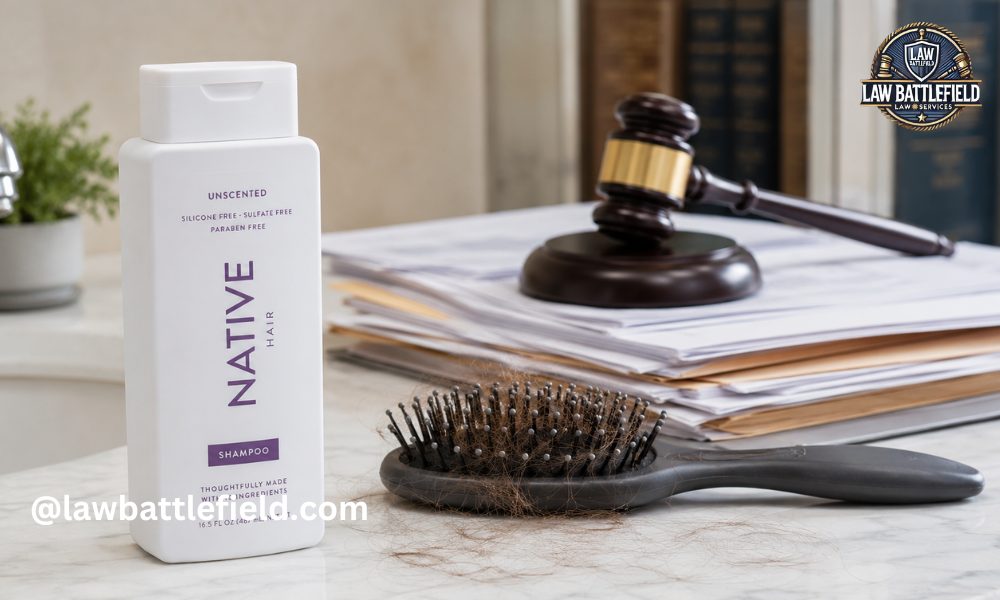
The phrase Native shampoo lawsuit has attracted attention because several different issues have been combined in online discussions. These include an attorney-led investigation involving PFAS concerns, consumer reports of hair loss and scalp irritation, and a separate lawsuit involving Native deodorant advertising.
These matters are related to the same personal-care brand, but they are not the same legal action.
An active lawsuit is a case that has officially been filed in court and is still moving through the legal system. A class-action investigation usually means attorneys are gathering information to decide whether there is enough evidence to file a case. Consumer complaints are personal reports submitted through reviews, social media, customer-service channels, or safety-reporting systems. Social media allegations are online claims that may not have been independently tested or verified.
As of June 6, 2026, publicly available information does not show an active, certified class-action lawsuit specifically alleging that Native shampoo causes hair loss. The main shampoo-related concern appears to come from an earlier investigation into whether Native’s “clean” marketing could be misleading if certain products contained PFAS. At the same time, some users have reported increased shedding, dryness, itching, or scalp irritation after using Native hair products.
This article explains the latest Native shampoo lawsuit update, the PFAS investigation, hair loss complaints, the separate deodorant case, possible eligibility, and whether any official payout exists.
Quick Guide Table
| Topic | Current Position |
| Active shampoo lawsuit | No confirmed active class-action lawsuit specifically against Native shampoo |
| PFAS investigation | Attorneys reportedly examined possible PFAS content and clean-marketing claims |
| Hair loss claims | Consumers have reported shedding and irritation, but direct causation is not scientifically proven |
| Class-action status | No publicly confirmed certified Native shampoo class action |
| Lawsuit results | No court has ruled that Native shampoo causes hair loss |
| Official payout | No verified settlement fund or payout is currently available |
| Product recall | No confirmed FDA recall specifically involving Native shampoo |
| Deodorant lawsuit | A separate Native deodorant advertising lawsuit was dismissed in April 2025 |
| Consumer action | Stop using the product if irritation occurs, save evidence, and consult a dermatologist |
Important Steps for Affected Consumers
- Stop using the shampoo if you experience itching, burning, unusual shedding, or scalp irritation.
- Keep the product and packaging, including the bottle, receipt, lot number, scent, and purchase information.
- Take dated photographs of scalp irritation, hair thinning, or other visible symptoms.
- Create a symptom timeline showing when you started using the shampoo and when the reaction began.
- Consult a dermatologist to identify possible allergies, scalp conditions, or other causes of hair loss.
- Monitor verified legal sources before submitting personal information through an online lawsuit or payout form.
Native Shampoo Lawsuit Update for 2026
The most important update is that there does not appear to be a publicly verified, active class-action case specifically targeting Native shampoo as of June 6, 2026.
Attorneys previously investigated whether certain Native personal-care products were marketed in a misleading way. The concern focused on claims such as “clean,” “simple,” or naturally focused branding in connection with possible PFAS content. Reports about that investigation identified products from several categories, including shampoo, body wash, and deodorant.
However, an attorney investigation is not the same as a filed lawsuit. It does not mean a court has found the company responsible, approved a class, or ordered compensation.
No verified Native shampoo settlement fund, court judgment, formal class certification, or shampoo-related payout has been announced in the public sources reviewed for this article. There is also no confirmed FDA recall specifically involving Native shampoo in the FDA materials reviewed.
Much of the confusion comes from articles and videos that use the words “lawsuit” and “investigation” as though they mean the same thing. Some also mix the shampoo concerns with a separate Native deodorant lawsuit that was dismissed in 2025.
How the Native Shampoo Lawsuit Claims Began
The controversy developed around the way Native markets its personal-care products. Native has built much of its public image around straightforward formulas and clean-focused branding. This type of marketing may influence shoppers who are trying to avoid ingredients they consider unnecessary or concerning.
Consumer attorneys began examining whether such marketing could be misleading if testing showed the presence of PFAS. These substances are sometimes called “forever chemicals” because many of them break down very slowly in the environment.
The basic legal theory was not simply that a product might contain a particular substance. The larger question was whether consumers paid a higher price or chose Native because they believed the products matched certain clean or natural expectations.
That question remained part of an investigation rather than a proven court finding. An allegation does not establish that Native broke the law. It also does not prove that every product contained PFAS or that any detected amount created a health risk.
The PFAS Investigation Into Native Personal-Care Products
PFAS stands for per- and polyfluoroalkyl substances. It is a large group of manufactured chemicals used in many industrial and consumer applications. Their resistance to water, oil, heat, and stains has made them useful, but their environmental persistence has also created public concern.
PFAS questions have expanded into cosmetics and personal-care products because consumers want to understand what is present in products used on the skin, scalp, and hair. The health meaning of a laboratory finding can depend on the specific chemical, amount, exposure route, and length of exposure.
The reported Native investigation included products such as Cucumber & Mint Shampoo, Powder & Cotton Body Wash, and Citrus & Herbal Musk Deodorant. The investigation appeared to focus on possible false-advertising or greenwashing concerns rather than a confirmed finding that the shampoo caused physical injuries.
No publicly verified court decision reviewed for this article has ruled that Native shampoo contained unsafe PFAS levels. There is also no confirmed judgment requiring Native to compensate shampoo buyers over PFAS claims.
An inconclusive investigation means attorneys may have collected information without moving forward with a public case, or that there was not enough evidence available to establish a viable claim. It does not prove the allegations were true or false. It simply means no clear legal result has emerged.
Native Shampoo Hair Loss Complaints Explained
Online discussions about Native shampoo hair loss commonly mention increased shedding, scalp irritation, dryness, itching, thinning, and changes in hair texture. Some users say their symptoms appeared after they started using a Native shampoo or conditioner.
These reports may be genuine descriptions of individual experiences. However, personal timing does not establish medical causation. Hair shedding may begin for many reasons, and people often notice it during or shortly after changing a hair-care product.
A shampoo could irritate a sensitive scalp without being the direct cause of permanent hair loss. A person may also react to fragrance, a cleansing agent, a preservative, or another ingredient that most users tolerate without difficulty.
Online reviews can help identify patterns worth studying, but they cannot replace controlled research, medical examinations, product testing, or formal safety investigations. Reports from TikTok, Reddit, Facebook, or product-review pages should therefore be treated as consumer experiences rather than proven scientific evidence.
Is There Evidence That Native Shampoo Causes Hair Loss?
There is currently no strong clinical evidence showing that Native shampoo directly causes hair loss in the general population.
To prove such a connection, researchers would normally need reliable medical records, clear exposure data, appropriate comparison groups, product testing, and evidence that other likely causes were considered. Repeated findings across well-designed studies would provide stronger support than individual online reports.
Sudden shedding may be associated with stress, illness, hormonal changes, nutritional problems, thyroid conditions, childbirth, certain medications, tight hairstyles, genetic hair loss, or scalp disease. Hair breakage can also be mistaken for shedding from the root.
Individual sensitivity remains possible. A person who develops inflammation after using a shampoo may experience itching, scratching, discomfort, or temporary shedding. However, the fact that symptoms began after using a product does not automatically prove that the product was responsible.
Anyone experiencing unusual hair loss should record when the symptoms started, stop using a suspected product if irritation is present, and speak with a dermatologist. A professional evaluation can help distinguish breakage, temporary shedding, allergic dermatitis, infection, and other causes.
Native Shampoo Ingredients and Possible Scalp Reactions
Shampoos contain cleansing agents that help remove oil, sweat, dirt, and product buildup. Some formulas also contain fragrance and other ingredients that can bother people with sensitive skin.
Cocamidopropyl betaine is a cleansing and foaming ingredient used in many shampoos and personal-care products. Medical literature recognizes that cocamidopropyl betaine or impurities connected with its production can cause allergic contact dermatitis in some people. This reaction is not unique to Native products.
Contact dermatitis may cause itching, redness, burning, scaling, dryness, or tenderness. On the scalp, it can sometimes be difficult to identify because the hair may hide visible inflammation. Persistent scratching and significant inflammation may contribute to breakage or temporary shedding in some cases.
Fragrance is another possible trigger for sensitive users. Preservatives and other cleansing ingredients may also cause irritation or allergy, depending on the person.
This does not mean these ingredients are harmful to everyone. A product may work well for thousands of users while causing a reaction in a smaller group. Personal tolerance, existing skin conditions, allergies, and the way a product is used can all affect the outcome.
The Native Deodorant Lawsuit and Why It Is Often Confused With Shampoo Claims
The clearest documented legal case involving Native concerned deodorant advertising, not shampoo-related hair loss.
In Hernandez v. Zenlen, Inc., consumers challenged a Native Whole Body Deodorant claim promoting “clinically proven 72-hour odor protection.” The plaintiffs argued that the wording could mislead reasonable shoppers about how the product performed.
The case was filed in federal court in New York in June 2024. After an amended complaint and a motion to dismiss, the court granted Zenlen’s dismissal request on April 9, 2025. The court directed the clerk to enter judgment for the defendant and close the case.[1]
This lawsuit did not decide whether Native shampoo causes shedding, irritation, or thinning. It also did not confirm PFAS allegations involving shampoo.
The deodorant case is often mentioned in Native shampoo articles because Zenlen sells several Native product categories. Combining all disputes under one broad “Native lawsuit” label can make it seem as though a shampoo case produced a court ruling when that did not happen.
Native Shampoo Class Action Lawsuit Status
A class action is a lawsuit in which one or more plaintiffs seek to represent a larger group of people who allegedly experienced a similar legal injury. Filing a complaint does not automatically create a certified class.
A law firm investigation is an information-gathering stage. A filed complaint begins a court case. Class certification occurs only if the court approves the case to proceed on behalf of a defined group. A settlement is an agreement resolving claims, usually subject to court approval in a class action.
As of June 6, 2026, no publicly verified court order reviewed for this article shows that a Native shampoo class has been certified. There is also no official Native shampoo settlement administrator accepting claims.
Consumers should be cautious when a website uses phrases such as “join now,” “claim your payout,” or “get compensation” without identifying a court, case number, settlement administrator, or filing deadline. Some law firms legitimately ask potential clients to share information during an investigation, but that is not the same as submitting an official settlement claim.
Native Shampoo Lawsuit Results So Far
The known results are limited.
The earlier Native personal-care investigation raised questions about PFAS and clean-marketing claims, but it has not produced a publicly confirmed shampoo settlement or final judgment. No court identified in the sources reviewed has ruled that Native shampoo caused hair loss.
The separate deodorant lawsuit resulted in dismissal of the amended complaint and closure of the case in April 2025. That decision related to deodorant advertising, not shampoo safety.[1]
There is no verified public finding that Native admitted wrongdoing over shampoo-related PFAS or hair loss claims. There is also no certified shampoo class, approved settlement, or court-ordered shampoo payout.
The most accurate summary is that consumer concerns and online complaints exist, but the stronger claims circulating online go beyond the confirmed legal record.
Is There a Native Shampoo Lawsuit Payout?
There is no verified Native shampoo lawsuit payout available as of June 6, 2026.
A payout would normally require a settlement, judgment, or another formal compensation program. An approved notice would explain who qualifies, how to file, what documents are needed, and when claims are due.
Online payout estimates may be based on guesses, comparisons with unrelated lawsuits, or attempts to attract website traffic. They should not be treated as official figures.
Should a future case move forward, compensation could depend on proof of purchase, documented physical injury, medical expenses, the legal theory of the case, class eligibility, and the terms of any settlement. Some consumer cases provide small purchase-based payments, while injury claims may require stronger individual evidence. No result can be predicted before a case is filed and resolved.
Consumers should not pay a fee merely to complete an unknown online settlement form. Official class-action claim forms are generally submitted to an identified administrator under a court-approved process.
Who Could Be Eligible If a Lawsuit Moves Forward?
Eligibility would depend entirely on the wording of a future complaint, certified class definition, or settlement agreement.
Possible factors could include purchasing a named Native shampoo during a specific period, relying on clean or natural marketing, having proof of purchase, or experiencing a medically documented reaction. Receipts, online order histories, bottles, packaging, photographs, lot numbers, and medical records could become important.
However, buying Native shampoo alone would not guarantee compensation. A marketing case might focus on what consumers paid or believed, while a personal-injury claim would require evidence connecting the product to a specific injury.
Until an official case and class definition exist, no website can reliably promise that a particular consumer qualifies.
What Consumers Experiencing Hair Loss or Scalp Irritation Should Do
If a shampoo appears to cause burning, itching, rash, or increased shedding, stop using it and rinse the scalp carefully. Seek prompt medical help for severe swelling, breathing difficulty, blistering, infection, or other serious symptoms.
Keep the bottle, packaging, receipt, and lot or batch information. Take dated photographs of visible irritation or changes in hair density. Write down when you began using the product, how often you used it, and when the symptoms appeared.
A dermatologist can examine the scalp, review other possible causes, and decide whether allergy testing or other tests are appropriate. Serious cosmetic reactions may also be reported to the FDA through its safety-reporting system.[2]
Legal advice may be useful when a person has significant medical bills, lost income, or a professionally documented injury. Medical care should come before efforts to join an online claim.
How to Document a Possible Native Shampoo Claim
Create a clear timeline of your product use and symptoms. Save store receipts, digital orders, photographs, medical notes, prescriptions, and treatment bills.
Record the exact product name, scent, bottle size, place of purchase, and lot number. Preserve emails or messages sent to Native, the retailer, or a healthcare provider.
Do not alter or discard the remaining product if you believe it may be relevant. Store it safely and ask a qualified lawyer or product-safety professional before arranging private testing.
Good records do not prove a claim by themselves, but they can help doctors, regulators, and attorneys understand what happened.
How to Verify Future Native Shampoo Lawsuit Updates
Reliable updates should identify the court, case number, parties, filing date, and current status. Federal cases can be checked through official court-record systems, while state cases should be verified through the relevant state court.
An official settlement notice should name the court-approved administrator and explain deadlines, eligibility, and claim procedures. Readers can also check FDA recall and safety pages for confirmed product actions.
Use caution with copied articles, anonymous social media posts, and pages that do not link their claims to legal records. Always check the publication date because an old investigation may be described as though it were a new lawsuit.
Common Misunderstandings About the Native Shampoo Lawsuit
An investigation does not mean Native has already lost a shampoo lawsuit. It means attorneys were examining whether a case could be supported.
Consumer hair loss reports do not prove that the shampoo caused every reported problem. They may justify concern or further study, but medical causation requires stronger evidence.
The deodorant lawsuit does not confirm the shampoo allegations. It involved a different product and a different advertising claim.
A class action does not guarantee money for every buyer. A court must first approve the class, and any settlement would contain specific eligibility rules.
A report about a chemical does not prove every bottle contains an unsafe amount. Testing methods, chemical type, concentration, and exposure all matter.
Finally, an online claim form is not automatically official. Consumers should verify the case and administrator before sharing sensitive personal information.
Conclusion
The Native shampoo lawsuit 2026 discussion includes three separate issues: an attorney investigation involving PFAS and clean-marketing concerns, consumer reports of hair loss or scalp irritation, and a dismissed lawsuit involving Native deodorant advertising.
As of June 6, 2026, there is no verified certified Native shampoo class action, approved settlement, official payout, or court finding that Native shampoo causes hair loss. There is also no confirmed Native shampoo recall in the FDA information reviewed.
Consumer complaints should not be ignored, but they should be described accurately. A personal report is not the same as scientific proof, and an investigation is not the same as a successful lawsuit.
Readers experiencing symptoms should stop using the suspected product, preserve useful records, and seek medical advice. Anyone following future Native shampoo lawsuit updates should rely on court documents, official recall notices, qualified medical sources, and clearly identified settlement administrators rather than unverified payout rumors.
Frequently Asked Questions
Is There An Active Native Shampoo Lawsuit In 2026?
No certified class-action lawsuit specifically claiming that Native shampoo causes hair loss has been publicly confirmed. The controversy mainly involves an attorney investigation, consumer complaints, and PFAS-related marketing concerns.
Does Native Shampoo Cause Hair Loss?
There is no conclusive scientific evidence proving that Native shampoo causes hair loss. Some consumers report shedding or irritation, but allergies, health conditions, stress, and other factors may also contribute.
Is There A Native Shampoo Lawsuit Payout Available?
No official settlement fund or Native shampoo lawsuit payout has been verified. Compensation would only become available after a formal lawsuit, settlement, judgment, or approved consumer compensation program.
Does Native Shampoo Contain PFAS?
Earlier reports raised concerns about possible PFAS in certain Native personal-care products. However, no final court ruling has established that every Native shampoo contains PFAS or presents an unsafe exposure level.
What Should I Do If Native Shampoo Irritates My Scalp?
Stop using the product, preserve the bottle and receipt, photograph symptoms, and consult a dermatologist. Keep medical records and purchase details in case a verified legal claim develops later.
Was this article helpful? Check out more on Lawbattlefield.com
Disclaimer: This article is provided for general informational and educational purposes only. It does not offer legal, medical, or professional advice and does not create an attorney-client or doctor-patient relationship.
Taxotere Lawsuit Attorney Guide: Eligibility, Settlement Updates, And What To Expect