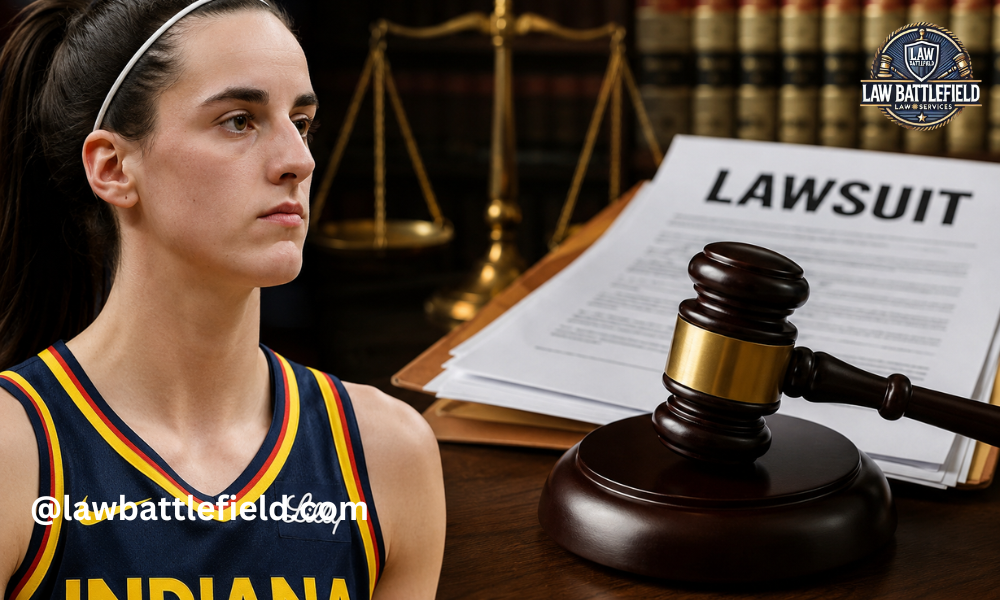
Many people are searching for the term “caitlin clark lawsuit” because viral posts, videos, and headlines have created confusion around the WNBA star. Some online claims say Caitlin Clark sued a media analyst. Others suggest she was sued by another player. Some even claim her team took legal action against WNBA referees. These stories sound dramatic, but most of them are not based on real court cases.
The truth is much simpler. There is no verified civil lawsuit involving Caitlin Clark based on the viral claims spreading online. The rumors connected to ESPN analyst Monica McNutt, Chicago Sky player Angel Reese, and WNBA referees are not confirmed by reliable legal records or major credible news sources.
However, Caitlin Clark’s name has appeared in one real legal matter. That case was not a civil lawsuit filed by or against Clark. It was a criminal stalking and harassment case involving a man named Michael Lewis, who targeted Clark and later pleaded guilty.
This article explains the Caitlin Clark lawsuit topic in a clear and simple way. It separates fake online rumors from verified legal information, so readers can understand what really happened and what claims should not be trusted.
Quick Guide Table: Caitlin Clark Lawsuit Claims
| Claim | Is It Real? | What Readers Should Know |
| Caitlin Clark sued Monica McNutt | No confirmed lawsuit | Viral defamation claims are not backed by verified court records. |
| Angel Reese sued Caitlin Clark | No confirmed lawsuit | Their connection is a sports rivalry, not a verified legal battle. |
| Clark’s team sued WNBA referees | No confirmed lawsuit | Officiating issues are normally handled through league processes. |
| Caitlin Clark was linked to a stalking case | Yes | Clark was the victim in a criminal stalking and harassment case. |
| Viral lawsuit videos are reliable | Usually no | Many come from clickbait, satire, or low-quality social media pages. |
Helpful Points for Readers
- Most viral Caitlin Clark lawsuit stories are fake or unverified.
- No confirmed civil lawsuit exists involving Monica McNutt, Angel Reese, ESPN, or WNBA referees.
- The real legal case linked to Clark involved stalking and harassment against her.
- Readers should check court records and trusted news sources before believing legal claims.
- Social media headlines can be misleading, especially when they use dramatic words like “breaking” or “million-dollar lawsuit.”
Caitlin Clark Lawsuit Overview
The keyword “caitlin clark lawsuit” is mostly used by people trying to understand whether Caitlin Clark is involved in a legal dispute. Because Clark is one of the most talked-about athletes in women’s basketball, even small rumors about her can quickly become viral.
In search results, this keyword may bring up different types of content. Some pages try to explain real updates. Others use shocking titles to attract clicks. Social media posts and short videos often make the situation more confusing because they may use dramatic language without showing proof.
The important thing to understand is that a viral claim is not the same as a verified lawsuit. A real lawsuit usually has a court filing, a case number, named parties, and documents that can be checked through official records. A rumor, on the other hand, may come from a social media post, a satire page, or a video made only to get views.
Caitlin Clark has been involved in many public conversations because of her success, popularity, and intense media attention. But public debate, sports rivalry, or criticism from commentators does not automatically mean there is a lawsuit. That is why the Caitlin Clark lawsuit topic needs careful explanation rather than emotional reactions.
Are the Caitlin Clark Lawsuit Rumors Real?
Most viral Caitlin Clark lawsuit rumors are not real. There is no confirmed civil lawsuit showing that Clark sued Monica McNutt, Angel Reese, ESPN, WNBA referees, or league officials over the viral claims commonly seen online.
Many of these rumors appear to come from social media pages that post exaggerated or fictional sports stories. Some use words like “breaking,” “shocking,” or “million-dollar lawsuit” to make readers click. Others create AI-style videos with dramatic voiceovers, but they do not show any real court documents.
Readers should be careful because fake legal stories can spread faster than corrections. A post may look professional, but that does not mean it is accurate. Some websites copy each other’s claims without checking facts. This creates a cycle where one false headline becomes many false headlines.
When it comes to legal news, proof matters. If there is no court name, no filing date, no case number, and no reliable report from a trusted source, the claim should be treated with doubt. In the case of the viral Caitlin Clark lawsuit rumors, the available evidence does not support the idea that these civil lawsuits are real.
Monica McNutt and Caitlin Clark Defamation Rumor
One of the most common rumors claimed that Caitlin Clark filed a major defamation lawsuit against ESPN analyst Monica McNutt. The story spread online after public debate about media coverage, race, popularity, and Clark’s impact on the WNBA.
The rumor suggested that Clark took legal action because of comments made on television or in sports discussions. Some posts even claimed there was a multimillion-dollar lawsuit. However, no confirmed defamation case has been found in reliable public reporting or verified court records.
It is important to understand that strong commentary does not automatically become defamation. Sports analysts often share opinions about players, media attention, league growth, and public narratives. People may agree or disagree with those opinions, but disagreement alone is not the same as a lawsuit.
Defamation cases require specific legal claims and formal filings. A person must generally show that a false statement of fact caused harm. Public figures also face a higher legal standard. None of the viral Monica McNutt claims have shown the kind of verified legal proof needed to support the rumor.
So, when readers see headlines saying Caitlin Clark sued Monica McNutt, they should understand that those claims are not supported by confirmed legal information.
Angel Reese and Caitlin Clark Lawsuit Claims
Another major part of the Caitlin Clark lawsuit discussion involves Angel Reese. Clark and Reese have been linked in public conversation since their college basketball days, and their rivalry has followed them into the WNBA. Because both players have large fan bases, online debates about them can become intense very quickly.
Some viral posts have claimed that Angel Reese sued Caitlin Clark for millions of dollars. Other posts have suggested the opposite, saying Clark sued Reese over comments, rivalry issues, or supposed defamation. These claims are not supported by verified legal records.
What does exist is a high-profile sports rivalry. Clark and Reese are both competitive athletes. They have played in major games, drawn huge media attention, and become part of a larger conversation about women’s basketball. Fans and commentators often discuss their matchups, but that does not mean a legal case exists.
Sports rivalries are common. They can create emotional headlines, heated social media arguments, and strong opinions. But a rivalry is not a lawsuit. Unless there is an official court filing or reliable legal report, claims about Clark and Reese suing each other should be treated as false or unverified.
The safest way to understand this topic is to separate basketball drama from legal reality. Clark and Reese may continue to be compared by fans and media, but there is no confirmed lawsuit between them based on the viral stories.
WNBA Referee Lawsuit Rumors Explained
Some online videos have also claimed that Caitlin Clark’s team filed a large lawsuit against WNBA referees or league officials. These videos often mention unfair treatment, hard fouls, missed calls, or alleged targeting during games.
It is true that WNBA officiating can become a major talking point, especially when popular players are involved. Fans may believe a player is not getting fair calls. Coaches may raise concerns. Media personalities may discuss physical play and league protection. But these issues are usually handled within sports systems, not through civil lawsuits.
Professional leagues have internal ways to review officiating, player safety, fines, flagrant fouls, and discipline. Teams and players may speak publicly, file complaints through league channels, or ask for better enforcement. That is different from filing a lawsuit in civil court.
The viral claims about a massive referee lawsuit connected to Caitlin Clark do not appear to be supported by verified court records. They seem to be part of the same pattern as other fake lawsuit stories: dramatic headlines, emotional fan reactions, and little or no proof.
Readers should remember that criticism of referees is common in sports. A controversial call can create days of debate online. But controversy on the court does not automatically become a legal case.
The Real Legal Case Connected to Caitlin Clark
While most Caitlin Clark lawsuit rumors are fake, there was a real legal case connected to her name. This case involved criminal stalking and harassment, and Caitlin Clark was the victim.
In July 2025, Michael Lewis, a man from Texas, pleaded guilty to stalking and harassment charges connected to Caitlin Clark. Reports said he had sent threatening and sexually explicit messages to Clark through social media. Authorities traced the activity and the case moved through the criminal court system in Indiana.
This was not a civil lawsuit where Caitlin Clark sued someone for money. It was a criminal case handled by prosecutors. That difference matters. In a civil lawsuit, one person or organization usually brings a claim against another person or organization. In a criminal case, the government prosecutes someone accused of breaking the law.
Lewis was sentenced after pleading guilty, and court orders included restrictions designed to protect Clark. These details show that the real legal matter was serious and personal, not a celebrity lawsuit or sports rivalry issue.
This section should be discussed with care. Stalking and harassment are serious matters, and public figures can face real safety risks because of unwanted attention. In this case, Clark was not creating legal drama. She was the target of harmful conduct, and the legal system responded through criminal charges.
Why Fake Caitlin Clark Lawsuit Stories Went Viral
Fake Caitlin Clark lawsuit stories went viral because they combine several things that attract attention: celebrity, sports rivalry, controversy, and legal drama. When a famous athlete is involved, even an unverified claim can spread quickly.
Social media platforms reward engagement. A shocking headline can get comments, shares, and reactions even when it is not true. Many users respond before reading the full post or checking the source. This helps false stories travel faster.
The Caitlin Clark topic is especially easy for rumor pages to exploit because she is already a major public figure. She brings attention to the WNBA, draws strong opinions, and has passionate supporters and critics. Any headline involving her name is likely to get clicks.
Fake lawsuit stories also feel serious because legal language sounds official. Words like “defamation,” “civil case,” “court filing,” and “settlement” can make a rumor seem real. But if those words are used without proof, they are just part of the clickbait.
Another reason these stories spread is that people often want simple narratives. A sports debate may be complicated, but a headline saying “Caitlin Clark sues analyst” feels clear and dramatic. That makes it easy to share, even if it is false.
How to Check Caitlin Clark Lawsuit Claims Safely
Readers can protect themselves from misinformation by checking lawsuit claims before believing or sharing them. The first step is to look for official details. A real lawsuit should normally include the court where it was filed, the filing date, the parties involved, and sometimes a case number.
Reliable news outlets are also important. If a major legal case involving Caitlin Clark existed, it would likely be covered by trusted sports reporters, legal reporters, or mainstream news organizations. If the only sources are anonymous pages, low-quality websites, or social media videos, the claim is weak.
Screenshots should not be trusted by themselves. A screenshot can be edited, taken out of context, or created to look real. AI-generated videos can also sound confident while giving false information. A professional voiceover does not prove that a legal case exists.
Readers should also compare multiple credible sources. If one post claims a lawsuit exists but no reliable outlet confirms it, the safer conclusion is that the claim is unverified. For legal news, silence from credible sources can be an important warning sign.
The best approach is simple: do not believe a lawsuit headline until you see real proof. This is especially true with the Caitlin Clark lawsuit topic, where many viral claims have already turned out to be false.
Caitlin Clark, Media Coverage, and Online Misinformation
Caitlin Clark’s career has created major media interest. Her college success, WNBA debut, record-setting popularity, and impact on women’s basketball have made her one of the most discussed athletes in the United States. With that attention comes a large amount of online commentary.
Media debates about Clark often include topics such as race, popularity, league marketing, player treatment, physical defense, and fan behavior. These discussions can be serious and sometimes emotional. But when clips are taken out of context, they can turn into false stories.
For example, a commentator’s opinion may become a fake headline about defamation. A hard foul may become a fake claim about a referee lawsuit. A rivalry moment may become a false story about one player suing another. This is how misinformation grows from real conversations.
The goal should not be to attack players, analysts, or fans. The better approach is to focus on accuracy. Sports fans can disagree, debate, and support their favorite players without spreading false legal claims.
The Caitlin Clark lawsuit topic shows how easily online misinformation can mix with sports culture. A real game moment can become a fake legal story within hours. That is why readers need clear, fact-based information instead of emotional rumors.
What Readers Should Know Before Sharing Lawsuit News
Before sharing any lawsuit news about Caitlin Clark, readers should ask one simple question: where is the proof? A real legal story should not depend only on a viral caption or dramatic video title.
A confirmed lawsuit usually has a real court connected to it. It may be filed in federal court or state court, depending on the issue. It should also name the parties clearly and explain the legal claims. If a post does not provide these basic details, it may not be trustworthy.
Readers should also understand the difference between opinion, satire, and real reporting. Some pages post fake stories for entertainment. Others write misleading headlines to get traffic. Some content creators may present rumors as if they are breaking news. These formats can confuse readers who are only scanning headlines.
It is also helpful to avoid sharing posts that use emotional pressure. Phrases like “the media won’t show you this” or “everyone is hiding the truth” are often used to make people react quickly. Good reporting does not need those tricks.
Sharing false legal claims can damage reputations and confuse other readers. When a topic involves a real person, especially someone facing intense public attention, accuracy matters. The best choice is to pause, verify, and share only information that comes from credible sources.
Current Status of Caitlin Clark Lawsuit Claims
As of the latest available public information, the viral civil lawsuit claims involving Caitlin Clark remain unverified or false. There is no confirmed civil lawsuit showing that Clark sued Monica McNutt, Angel Reese, ESPN, WNBA referees, or league officials over the popular rumors.
The real legal case connected to Clark involved Michael Lewis, who pleaded guilty in 2025 to stalking and harassment. That case should not be confused with fake civil lawsuit stories. It was a criminal matter in which Clark was the victim.
This distinction is important because many readers search for “caitlin clark lawsuit” expecting one clear answer. The answer is that the viral lawsuit claims are not real, but there was a real criminal case connected to her safety.
Because online rumors can change quickly, readers should always check the date and source of any new claim. If a new lawsuit is ever filed in the future, reliable outlets and official records would be the best places to confirm it. Until then, the current status remains clear: the popular civil lawsuit stories are not supported by verified facts.
Key Takeaways About the Caitlin Clark Lawsuit
The main takeaway is that most Caitlin Clark lawsuit claims online are fabricated. The viral stories about Monica McNutt, Angel Reese, WNBA referees, and ESPN do not have confirmed legal support.
There is no verified civil lawsuit connected to those rumors. Many of the claims appear to come from satire-style posts, clickbait headlines, and low-quality online content designed to attract attention.
The real legal matter linked to Caitlin Clark involved stalking and harassment against her. In that case, Michael Lewis pleaded guilty and was sentenced through the criminal justice system. Clark was not the person spreading legal drama; she was the victim of harmful conduct.
Readers should rely on court records, trustworthy news reports, and careful fact-checking. This is the safest way to understand the Caitlin Clark lawsuit topic without falling for misinformation.
Conclusion
The Caitlin Clark lawsuit topic is mostly driven by online misinformation. Viral posts have claimed that Clark sued or was sued by different people connected to the WNBA, sports media, and her public rivalry with Angel Reese. But those claims are not supported by verified civil court records or reliable reporting.
The truth is that there is no confirmed civil lawsuit involving Caitlin Clark based on the most common viral rumors. The Monica McNutt defamation story, the Angel Reese lawsuit claims, and the WNBA referee lawsuit videos should all be treated with caution because they lack real legal proof.
The only verified legal case connected to Clark’s name involved a criminal stalking and harassment matter in which she was the victim. That case was serious, but it was not the kind of lawsuit described in viral clickbait posts.
For readers searching “caitlin clark lawsuit,” the most important lesson is simple: separate rumor from fact. Legal claims should be checked through credible sources before they are believed or shared. In a fast-moving sports media world, careful verification is the best way to avoid spreading false information.
FAQs
Is There A Real Caitlin Clark Lawsuit?
No verified civil lawsuit exists based on the viral claims online. Most stories about Caitlin Clark suing or being sued are false, exaggerated, or unsupported by real court records.
Did Caitlin Clark Sue Monica Mcnutt?
No confirmed defamation lawsuit has been found between Caitlin Clark and Monica McNutt. The viral claim appears to come from misleading posts and clickbait-style online content.
Did Angel Reese Sue Caitlin Clark?
No verified lawsuit exists between Angel Reese and Caitlin Clark. Their connection is mainly a sports rivalry that has received heavy media and fan attention.
What Real Legal Case Is Linked To Caitlin Clark?
The real legal matter involved a criminal stalking and harassment case where Caitlin Clark was the victim. It was not a civil lawsuit filed by Clark for money.
Why Are People Searching For Caitlin Clark Lawsuit?
People are searching because viral social media posts and videos have spread fake lawsuit claims. Many readers want to know what is true and what is only online rumor.
Was this article helpful? Check out more on Lawbattlefield.com
Disclaimer: This article is for informational and educational purposes only. It is not legal advice and should not be treated as an official court record. Readers should always check trusted news sources, public court records, or legal professionals for the most accurate and updated information.
South Dakota Mesothelioma Lawyer Vimeo: The Support You Need for Asbestos Lawsuits