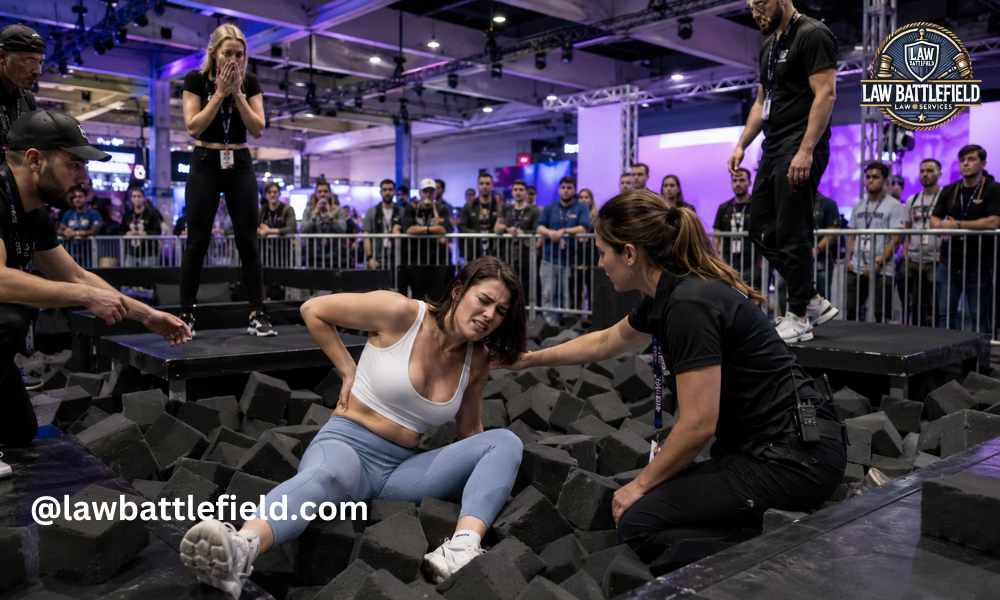
The Adriana Chechik lawsuit topic became widely searched after a serious injury at TwitchCon San Diego in October 2022. Adriana Chechik, known publicly as a Twitch streamer and former adult entertainment performer, was injured during a foam pit activity at the event. A short video of the moment spread quickly online, and many viewers questioned how a public event attraction could lead to such a severe injury.
The incident happened during TwitchCon 2022 at the San Diego Convention Center. Chechik participated in a booth activity where attendees stood on raised platforms and used padded jousting sticks. After winning the round, she jumped into the foam pit below and landed in a way that caused a serious back injury. She later said she had broken her back in two places and needed surgery. Early reports also linked the foam pit to Lenovo and Intel branding at the convention.
Since then, many readers have searched for terms such as “Adriana Chechik lawsuit update,” “Adriana Chechik lawsuit settlement,” and “did Adriana Chechik win her lawsuit.” The important point is that the public record is not as clear as many viral posts suggest. There are confirmed facts about the injury and public legal commentary, but there is no widely verified public court ruling or official settlement amount available as of July 2026.
This article explains what happened, why the accident raised legal questions, what settlement reports mean, and what is actually known about the Adriana Chechik lawsuit outcome.
Quick Guide Table
| Topic | Quick Explanation |
| Main Incident | Adriana Chechik was injured after jumping into a foam pit at TwitchCon 2022. |
| Location | The accident happened at the San Diego Convention Center during TwitchCon. |
| Injury | She publicly said she broke her back and needed major surgery. |
| Legal Focus | The case raised questions about event safety, negligence, waivers, and booth responsibility. |
| Settlement Status | Settlement claims exist online, but exact public confirmation is limited. |
| Reader Takeaway | The story is mainly about safety responsibility at public event attractions. |
Adriana Chechik Lawsuit: What Happened at TwitchCon
The incident took place during TwitchCon San Diego 2022, which ran from October 7 to October 9. TwitchCon is a major creator event where streamers, fans, companies, and sponsors gather for panels, booths, games, and brand activations. At this event, one attraction included a foam pit and a gladiator-style challenge.
Chechik joined the activity on October 8, 2022. The setup appeared playful and low-risk to viewers watching the clip online. Participants stood on separate platforms and tried to knock each other off using padded sticks. After the round ended, Chechik jumped into the foam pit in celebration. She landed on her tailbone area and immediately showed signs of severe pain.
The injury became a public safety issue because the activity was not a private backyard game. It happened inside a major convention, in front of cameras, at a branded booth. When an attraction is placed in a public event space, people naturally expect it to be designed, inspected, and supervised safely. That is why the Adriana Chechik TwitchCon lawsuit discussion grew so quickly.
The situation also drew attention because other people reportedly said they had been injured in the same foam pit. Business Insider reported that another streamer, LochVaness, said she dislocated her knee and sprained her ankle at the attraction.
The Foam Pit Accident That Led to the Injury Lawsuit
The foam pit attraction looked similar to a fun arena game. The idea was simple: two people stood on platforms, battled with padded sticks, and fell into a pit filled with foam cubes. In many gyms or stunt areas, foam pits are designed with enough depth and protection to reduce the risk of injury. The problem raised in this case was whether the TwitchCon foam pit was actually safe for people to jump or fall into.
In Chechik’s case, the issue was not only that she fell. The concern was what she landed on and how much protection the foam pit provided. Reports and online discussion claimed that the pit may have been shallow and that the foam cubes did not provide enough cushioning. Some legal commentary also focused on whether hard flooring or insufficient padding under the cubes made the attraction more dangerous than it appeared.
This became central to the Adriana Chechik injury lawsuit discussion because a foam pit can create a strong impression of safety. A person may reasonably believe that landing in foam cubes will soften the impact. If the pit is too shallow or built over a hard surface without proper protection, the attraction may look safer than it really is. That is one reason the case became less about a simple accident and more about event design, warnings, and responsibility.
Adriana Chechik Back Injury Lawsuit and Medical Impact
Chechik later said she broke her back in two places and needed surgery. Business Insider reported that she underwent surgery for a broken back and also mentioned nerve damage concerns. Syracuse Law Review also summarized the injury as a broken back in two places that required extensive surgery and months of recovery.
The medical impact was serious. A back injury can affect movement, sleep, work, daily tasks, and long-term comfort. Chechik shared parts of her recovery publicly, including pain, limited mobility, and the emotional difficulty of dealing with a sudden injury. Some reports also stated that she learned she was pregnant after being admitted to the hospital and that the pregnancy could not continue because of the surgery she needed. This detail should be handled with care because it involves private medical circumstances, but it shows why the public conversation around the injury became so emotional.
For many readers, the phrase “Adriana Chechik back injury lawsuit” is not only about money or court action. It is about how a public event attraction could result in a life-changing injury. That is why the medical side matters when understanding possible legal claims. Severe injuries often lead to larger claims because they can involve surgery, therapy, lost income, future care, and long-term pain.
Why the Foam Pit Design Became a Major Legal Issue
The foam pit design is the heart of the Adriana Chechik lawsuit discussion. Many people questioned whether the pit was deep enough, whether the padding was suitable, and whether event staff should have allowed people to jump into it. The appearance of foam cubes may have made the activity look safe, but the actual level of protection is what matters in a legal safety review.
A safe event attraction should be tested for the way people are likely to use it. In this case, people were expected to fall from raised platforms into the foam pit. That means the pit should have been designed to handle falls from that height. If the protective layer was too thin, if the base was too hard, or if the activity was not properly supervised, those details could become important in a personal injury claim.
Premises liability is the general legal idea often discussed here. In simple terms, it means people or companies responsible for a place may have a duty to keep visitors reasonably safe. For an event like TwitchCon, that could include checking attractions, warning participants about risks, and making sure the setup does not create hidden dangers. Legal experts told Business Insider that Twitch, the booth operator, Lenovo, and other involved parties could face liability questions even if waivers were signed.
Main Parties Linked to the Adriana Chechik TwitchCon Lawsuit
Several parties have been mentioned in public discussion of the Adriana Chechik TwitchCon lawsuit. Twitch was the main event organizer behind TwitchCon. Lenovo and Intel were connected to the booth branding or sponsorship reported by multiple outlets. Kairos Media was also mentioned in relation to a release form for the exhibit, according to Business Insider.
It is important not to assume that every named party would automatically be legally responsible. Liability depends on who designed the attraction, who approved it, who managed it, who staffed it, who inspected it, and what contracts existed behind the scenes. Large events often involve several companies, vendors, agencies, venue teams, and insurers. One party may organize the event, another may sponsor a booth, another may build the attraction, and another may manage safety operations.
That is why the lawsuit discussion is complicated. A reader may ask, “Was Twitch responsible?” or “Was Lenovo responsible?” The honest answer is that responsibility would depend on evidence. Courts and lawyers would look at contracts, safety checks, emails, inspection records, staff instructions, warning signs, and how the attraction was presented to attendees.
Legal Claims Behind the Adriana Chechik Injury Lawsuit
The main legal idea connected to the Adriana Chechik injury lawsuit is negligence. In plain English, negligence means someone failed to use reasonable care, and that failure caused harm. For this type of case, the question would be whether the attraction was designed and operated in a reasonably safe way.
A possible claim could focus on unsafe attraction design. If a foam pit was too shallow for people falling from platforms, or if it did not have enough padding under the foam cubes, a lawyer could argue that the setup created an avoidable danger. Another possible claim could involve failure to warn. If participants were not clearly warned that the pit was shallow or that jumping could cause serious injury, that may matter.
Another issue is supervision. At a public event, staff may be expected to control how people enter, play, jump, and leave the attraction. If staff saw risky behavior and did not stop it, or if the activity encouraged celebratory jumping without proper safety measures, that could also become part of the legal review.
These are possible legal theories, not confirmed court findings. As of the latest public information available, there is no widely confirmed public trial ruling that officially decides who was legally at fault.
Liability Waivers and Why They May Not End a Lawsuit
Many event attendees sign waivers before entering conventions or participating in activities. A waiver is a document that says the participant accepts certain risks. Because TwitchCon attendees reportedly signed standard event documents, some people assumed Chechik could not sue or recover anything. That assumption is too simple.
Legal experts have pointed out that waivers do not always protect a company from every claim. A waiver may cover normal risks, but it may not protect against gross negligence, hidden dangers, or reckless safety failures. Syracuse Law Review discussed this issue after the TwitchCon incident, explaining that the case raised questions about whether attendees had signed away the right to sue and how far such waivers could go.
For example, if a person joins a padded game, they may accept the normal risk of falling. But if the foam pit was built in a way that made serious injury much more likely than expected, that could be a different issue. The legal question would not simply be, “Did she sign a waiver?” It would also be, “Was the hazard reasonable, obvious, and properly managed?”
This article is not legal advice, but the general point is clear: waivers matter, yet they do not always end a serious injury claim.
Adriana Chechik Lawsuit Twitch Update
As of July 2026, the most responsible update is this: the injury is well documented, legal discussion was widespread, but a public lawsuit outcome or official settlement amount has not been clearly verified by reliable public records. Some online articles claim there was a confidential settlement, while others say no public court filing, trial result, or confirmed settlement has been reported.
This is important because Google readers often search for a simple answer. They want to know whether the Adriana Chechik lawsuit was filed, whether Twitch paid money, and whether the case is over. The honest answer is that the public information is limited. It is possible that a private claim or confidential settlement happened outside public view, but that should not be presented as confirmed unless there is strong evidence.
Legal disputes involving major companies often settle privately. Settlement agreements can include confidentiality terms, sometimes called NDAs. When that happens, the public may never see the exact amount, the legal reasoning, or the final terms. That may explain why the topic remains full of uncertainty years after the accident.
Adriana Chechik Lawsuit Settlement Reports
Many websites and social media posts discuss an Adriana Chechik lawsuit settlement. Some claim a multi-million dollar payout. However, readers should be careful with those claims. A reported settlement is not the same as a confirmed court record, official statement, or verified legal document.
A settlement means the parties resolve a dispute without a full trial. In personal injury cases, settlements are common because trials can be expensive, slow, stressful, and public. A company may settle without admitting wrongdoing. An injured person may settle to receive compensation sooner and avoid the uncertainty of trial. Insurers may also play a major role.
If there was a private settlement in the Adriana Chechik case, the terms may not be public. That means no responsible article should state an exact payout as fact unless it can be verified. The safest and most accurate phrasing is that settlement rumors and reports exist, but no widely confirmed official settlement amount is publicly available.
This distinction matters for trust. Readers deserve clear information, not exaggerated claims designed only to attract clicks.
Adriana Chechik Lawsuit Outcome and Public Questions
The biggest public question is the Adriana Chechik lawsuit outcome. Did the case go to trial? Was there a settlement? Did Twitch, Lenovo, Intel, or any other party accept responsibility? Based on public reporting and later legal summaries, no widely confirmed public trial ruling has been reported.
This does not mean nothing happened behind the scenes. Serious injury claims can be handled privately before a lawsuit is filed. Lawyers may negotiate directly with insurers and companies. A case can also be resolved confidentially before most people ever see a public docket. But without official documents, it is not fair to say that the lawsuit had a confirmed public outcome.
For readers, the best way to understand the outcome is to separate confirmed facts from open questions. Confirmed facts include the TwitchCon injury, the foam pit attraction, the public medical updates, and legal experts discussing possible liability. Unconfirmed or unclear details include any exact settlement amount, final legal admission, or official court judgment.
Did Adriana Chechik Win Her Lawsuit?
The question “Did Adriana Chechik win her lawsuit?” needs a careful answer. If “win” means a public court victory after trial, there is no widely confirmed public record showing that. If “win” means she may have received private compensation, that has been reported or speculated by some sources, but it has not been clearly confirmed through strong public documentation.
There is also a difference between winning a lawsuit and settling a claim. A court win usually means a judge or jury made a decision. A settlement means the parties agreed to resolve the matter, often without anyone admitting fault. In many personal injury cases, receiving compensation through settlement can still be a meaningful resolution, but it is not the same as a public trial victory.
So the most accurate answer is: Adriana Chechik’s injury led to serious legal discussion and possible private legal action, but no confirmed public court win or official settlement amount is available as of July 2026. This cautious answer may feel less dramatic, but it is more trustworthy.
How the TwitchCon Injury Changed Event Safety Discussions
The TwitchCon foam pit incident became more than a celebrity injury story. It became a warning about public event safety, especially at conventions where brands create interactive experiences for social media attention. A game may look fun on camera, but the safety design must match how real people will behave.
Event organizers and sponsors can learn several lessons from the incident. Attractions should be inspected by qualified safety professionals. Foam pits, mats, platforms, and landing areas should be tested for the actual height and movement involved. Staff should be trained to stop unsafe behavior, and warning signs should be clear.
The incident also raised questions about influencer events. Many booths are built to create viral moments. But when a brand encourages physical participation, it takes on a serious responsibility. A fun activation should not depend on luck. It should be built with the assumption that people may jump, fall awkwardly, celebrate, or misunderstand the risk.
For readers searching “Adriana Chechik Twitch injury lawsuit,” this is why the case still matters. It highlights how a single unsafe setup can change someone’s life and damage public trust in event organizers.
Conclusion: What the Adriana Chechik Lawsuit Shows About Event Safety
The Adriana Chechik lawsuit topic began with a serious TwitchCon foam pit injury in October 2022. Chechik participated in a branded attraction, jumped into a foam pit, and suffered a severe back injury that required surgery. The incident quickly raised questions about foam pit depth, padding, supervision, waivers, and who may have been responsible for keeping the attraction safe.
The legal side remains less clear than many online summaries suggest. There are strong reasons why people discussed negligence, premises liability, and possible claims against event-related parties. However, as of July 2026, there is no widely confirmed public court ruling or official settlement amount available. Some settlement reports may exist, but responsible coverage should not treat unsupported numbers as proven facts.
The lasting lesson is simple: public event attractions must be designed for real safety, not just entertainment value. Whether an event is run by a small group or major brands, visitors should not face hidden dangers in activities that appear safe. The Adriana Chechik TwitchCon lawsuit discussion remains important because it reminds organizers, sponsors, and venues that safety planning and accountability must come before spectacle.
FAQs
What Is The Adriana Chechik Lawsuit About?
The Adriana Chechik lawsuit topic is about her serious back injury at TwitchCon 2022 and the legal questions around foam pit safety, negligence, and event responsibility.
Did Adriana Chechik Sue Twitch?
Public discussion has linked the injury to possible legal action involving TwitchCon-related parties, but confirmed court details and final public records remain limited.
Was There An Adriana Chechik Lawsuit Settlement?
Some online reports mention a possible settlement, but no clearly verified public settlement amount is widely available. It is best to treat exact payout claims carefully.
Did Adriana Chechik Win Her Lawsuit?
There is no widely confirmed public court ruling showing a trial win. If any private settlement happened, the details may not be publicly available.
Why Did The Twitchcon Foam Pit Injury Become Controversial?
The incident became controversial because the foam pit appeared safe, but Chechik suffered a severe spinal injury, raising concerns about padding, pit depth, and event safety.
Was this article helpful? Check out more on Lawbattlefield.com
Disclaimer: This article is for informational purposes only. It does not provide legal, medical, or professional advice. Lawsuit details, settlement reports, and public updates may change, so readers should rely on official records or qualified professionals for final confirmation.
Karoline Leavitt Lawsuit: The Real Ap Case, Press Access Fight, And Media Controversies Explained