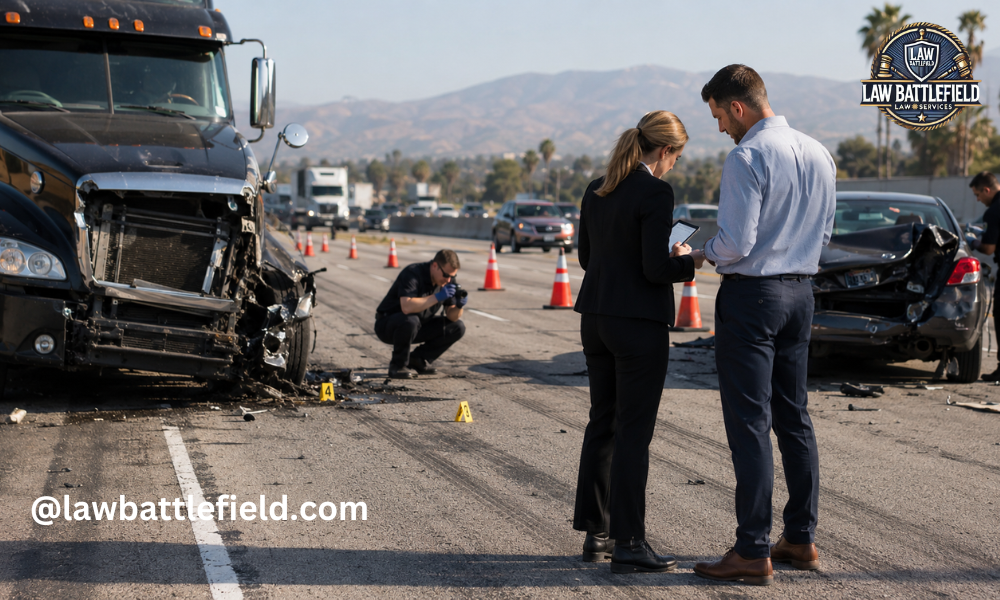
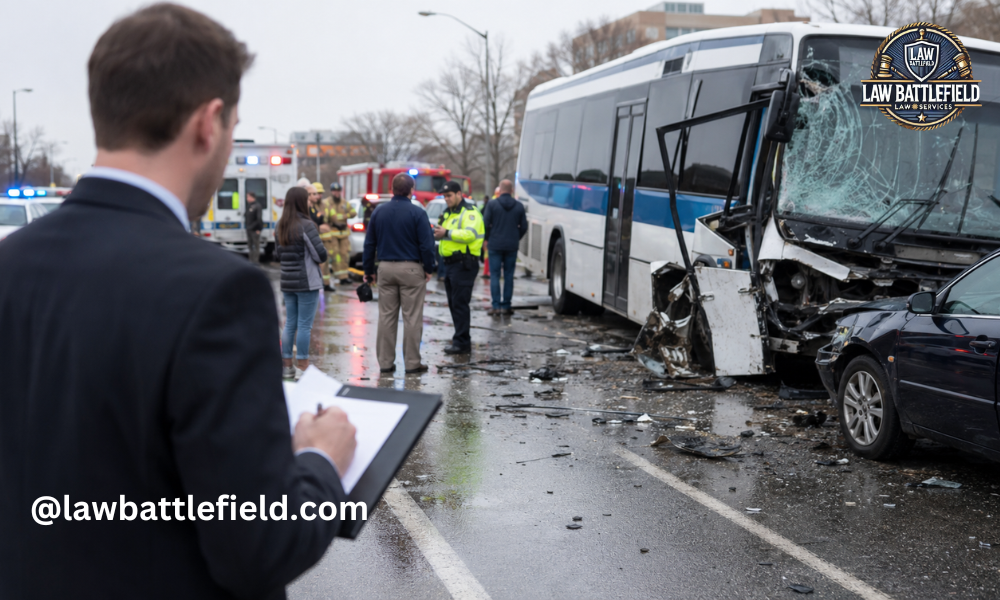
A bus crash lawsuit is a legal claim filed after a bus accident causes injury, death, or serious financial loss. It may be filed by injured passengers, students, pedestrians, cyclists, other drivers, or families who lost a loved one in a fatal crash. The goal is usually to recover compensation for medical bills, lost income, pain, emotional suffering, and other damages caused by someone else’s negligence.
Bus accident cases are often more complicated than regular car accident claims. A bus may be operated by a private company, a school district, a public transit agency, a tour service, or a commercial carrier. More than one party may share responsibility, including the bus driver, the company, a maintenance provider, a school district, another driver, or even a manufacturer if a vehicle defect played a role.
This article explains who may be liable in a bus crash lawsuit, what happens after a bus accident, what compensation may be available, and how different bus cases may involve different rules. It also briefly looks at why people search for cases such as the Humboldt Broncos bus crash lawsuit, Farmingdale bus crash lawsuit, Carrollton bus crash lawsuit, and Tusky Valley bus crash lawsuit.
Quick Guide Table
| Topic | What It Means |
| Main Purpose | To help injured victims or families recover money for losses after a bus crash. |
| Who Can File | Passengers, students, pedestrians, cyclists, drivers, or families of deceased victims. |
| Possible Liable Parties | Bus driver, bus company, school district, government agency, manufacturer, or another driver. |
| Common Compensation | Medical bills, lost wages, pain and suffering, emotional distress, and wrongful death damages. |
| Important Evidence | Police report, medical records, camera footage, witness statements, and maintenance records. |
| Key Risk | Missing filing deadlines, especially in public bus or school district claims. |
Step-by-Step Guide After a Bus Crash
- Get medical help first
Even if injuries seem minor, medical care creates an important health and legal record. - Report the accident
Make sure the crash is reported to police, the bus company, school district, or transit agency. - Collect evidence if possible
Save photos, witness names, ticket details, medical papers, and accident-related documents. - Avoid quick statements
Do not give recorded statements or accept early offers before understanding your full losses. - Check legal deadlines
Bus crash claims may have strict time limits, especially if a government agency is involved.
Understanding a Bus Crash Lawsuit
A bus crash lawsuit is a civil claim that seeks financial recovery after a bus accident. It is not the same as a criminal case. A criminal case may focus on punishment if a driver broke the law, while a civil lawsuit focuses on helping victims recover losses.
A legal claim may be filed when someone is hurt because another person or organization failed to act safely. This failure is often called negligence. In simple words, negligence means someone did not use reasonable care, and that careless action caused harm.
A bus crash lawsuit may arise after passenger injuries, student injuries, pedestrian or cyclist injuries, multi-vehicle collisions, or fatal bus crashes. Some claims involve one injured person, while others involve many passengers or families affected by the same crash.
To succeed, the injured person usually needs to show that a responsible party had a duty to act safely, failed in that duty, caused the accident, and created real damages. These damages may include medical costs, income loss, pain, and long-term health problems.
What Happens If a Bus Gets in an Accident
Many people search for what happens if a bus gets in an accident because the situation can feel confusing and stressful. The first step is usually emergency response. Police, fire crews, and medical teams may arrive to help injured passengers, secure the road, and prevent more harm.
After that, police usually investigate the crash. They may speak with the driver, passengers, witnesses, and other drivers. They may also take photos, prepare a report, and record basic details about the road, weather, vehicles, and injuries.
Medical treatment is also very important. Some injuries are clear right away, such as broken bones or cuts. Others, like concussions, back injuries, internal injuries, and emotional trauma, may appear later. Getting medical care helps protect both health and the legal record.
Insurance reporting may follow soon after. The bus company, school district, transit agency, or other involved drivers may notify their insurers. If the bus was operated by a company or government agency, there may also be an internal review.
Evidence collection is another major step. Camera footage, driver records, maintenance documents, inspection reports, witness statements, and crash scene photos may become important later if a bus crash lawsuit is filed.
Common Causes Behind Bus Crash Lawsuits
Bus crashes can happen for many reasons. Some accidents are caused by one clear mistake, while others happen because several safety failures come together.
Driver fatigue is a common concern, especially when drivers work long hours or operate buses during early morning or late-night trips. Distraction is another serious issue. A driver who looks at a phone, GPS device, paperwork, or another distraction may not react in time.
Speeding and unsafe driving can also lead to major injuries because buses are large, heavy vehicles. Sudden lane changes, tailgating, failing to slow for traffic, and taking turns too fast may all increase the danger.
Poor bus maintenance can also be a factor. If brakes, tires, lights, steering systems, or safety equipment are not properly inspected and repaired, the bus may become unsafe. In some cases, a defective part or design problem may contribute to the crash.
Unsafe road conditions, bad weather, and third-party driver negligence may also play a role. Weather alone does not always prove liability, but a driver or company may still be responsible if they made unsafe decisions in dangerous conditions.
Who Can Be Held Liable in a Bus Crash Lawsuit
Liability depends on what caused the accident. In many cases, more than one party may be responsible.
The bus driver may be liable if the crash happened because of speeding, distraction, drunk driving, drug use, fatigue, or careless operation. If the driver ignored traffic laws or failed to respond safely, their actions may become central to the claim.
The bus company may also be responsible. A company can be liable for its driver’s actions while working. It may also be directly responsible if it failed to train drivers, check backgrounds, inspect vehicles, enforce safety rules, or schedule trips safely.
A school district may be involved when a school bus crash affects students. Sometimes the district owns and operates the bus. In other cases, it contracts with a private transportation company. The details matter because they may affect deadlines, liability, and insurance coverage.
A government transit agency may be involved in public city bus crashes. These claims can have special rules because public agencies often have notice requirements and legal protections.
Maintenance contractors, bus manufacturers, parts manufacturers, other negligent drivers, road construction companies, or public entities responsible for unsafe roads may also be named if their actions helped cause the crash.
Liability in School Bus, Public Transit, and Charter Bus Accidents
Not all bus crash cases are the same. A school bus accident may involve children, parents, school officials, a district, and a private bus contractor. These cases often require careful review of student safety rules, driver history, route planning, and vehicle maintenance.
Public city bus accident claims may involve a government transit authority. These cases can be different because government agencies often have shorter claim deadlines and special procedures.
Private charter bus claims may involve tour groups, sports teams, church groups, school trips, or event transportation. These cases may include questions about driver training, company safety policies, trip planning, and whether the bus was properly inspected before the trip.
Tour bus and interstate bus cases may involve commercial carrier rules, federal safety standards, driver logs, and insurance requirements. When a bus travels between states, federal motor carrier rules may become part of the investigation.
Church, sports team, or event bus crashes may involve private organizations, contracted transportation companies, or volunteer drivers. The key question is always the same: who had a duty to keep people safe, and who failed to do so?
Evidence That Can Strengthen a Bus Crash Lawsuit
Strong evidence can make a major difference in a bus crash lawsuit. The more clearly the evidence shows what happened, the easier it may be to prove responsibility.
A police accident report is often one of the first important documents. It may include witness names, vehicle details, crash diagrams, citations, and the officer’s observations. Medical records are also important because they connect injuries to the crash and show the cost and seriousness of treatment.
Witness statements can help explain what people saw before, during, and after the accident. Bus camera footage, dashcam video, traffic cameras, or nearby surveillance footage may also show the driver’s actions and the movement of vehicles.
Driver logs, maintenance records, inspection reports, and company safety policies may reveal whether the bus company followed proper safety practices. In some cases, black box or electronic data may show speed, braking, steering, or other vehicle activity before impact.
Photos of the crash scene, road conditions, vehicle damage, and visible injuries can also help preserve details that may disappear quickly after the accident.
Compensation Available After a Bus Crash
Compensation in a bus crash lawsuit depends on the injuries, losses, evidence, and applicable law. The purpose is to help victims recover the financial and personal losses caused by the accident.
Medical bills are often the first major category. These may include ambulance care, emergency room treatment, surgery, hospital stays, medication, follow-up visits, physical therapy, and future medical care.
Lost wages may also be included if the injured person missed work. If the injury affects the person’s ability to work in the future, the claim may include reduced earning ability.
Victims may also seek compensation for pain and suffering, emotional distress, disability, scarring, long-term limitations, and loss of quality of life. These losses can be harder to measure, but they are often very real.
Property damage may apply if a person’s vehicle, phone, personal items, or other belongings were damaged. In fatal cases, families may seek funeral and burial costs, loss of financial support, and loss of companionship.
Wrongful Death Claims After a Fatal Bus Crash
When a bus crash causes death, surviving family members may be able to file a wrongful death claim. This type of claim is meant to help families recover losses caused by the death of a loved one.
Wrongful death damages may include funeral costs, burial costs, medical expenses before death, loss of financial support, loss of household services, and loss of companionship. Families may also experience deep emotional suffering, especially when the crash involved a child, parent, spouse, or close relative.
These cases should be handled with care and sensitivity. A wrongful death claim is not only about money. It is also about accountability and understanding what went wrong.
Because each state has its own rules about who can file and what damages may be recovered, families should pay close attention to deadlines and legal requirements.
Why Government-Related Bus Claims Can Be More Complicated
Bus crash claims involving public buses, school districts, or government agencies can be more complicated than claims against private companies. This is often because government entities may have special legal protections.
One major issue is the notice requirement. In some places, an injured person must notify the government agency within a shorter time than the normal lawsuit deadline. If this step is missed, the claim may be weakened or lost.
Shorter filing deadlines may also apply. Some claims involving public transit or school buses must follow strict timelines, and those timelines can vary by state, city, or agency.
Damage caps may also limit how much money can be recovered from a government entity. Sovereign immunity may protect certain public agencies from some lawsuits unless the law allows the claim under specific conditions.
This is why victims should understand deadlines early. Waiting too long can make a valid claim much harder to pursue.
Famous Bus Crash Lawsuits Readers Often Search For
Many readers search for well-known bus crash cases because they want to understand how liability, safety failures, and compensation work in real situations. These cases should be discussed carefully, without assuming the same facts apply to every claim.
The Humboldt Broncos bus crash lawsuit and Humboldt bus crash lawsuit are often searched because of the tragic 2018 crash involving a junior hockey team in Canada. Searches for judge tosses Humboldt Broncos bus crash lawsuit relate to later legal developments involving families and government responsibility.
The Farmingdale bus crash lawsuit is searched because it involved a school band trip crash in New York and raised questions about driver conduct, bus company responsibility, school district duties, and vehicle safety.
The Carrollton bus crash lawsuit is often connected to historic school bus safety discussions and questions about preventable tragedy, drunk driving, and safety reforms.
The MARS bus crash lawsuit appears to relate to Mars Area School District bus crash claims in Pennsylvania, where families raised concerns after students were injured.
The Tusky Valley bus crash lawsuit is searched because of the Ohio crash involving students and chaperones. The case brought attention to multi-vehicle crashes, commercial driver responsibility, and the serious impact on school communities.
The Alton bus crash lawsuit may be searched by readers looking for information about a specific local crash or claim. Because names and locations can overlap, readers should always confirm the exact case, court, and parties involved.
How Bus Crash Lawsuits Differ From Regular Car Accident Claims
A bus crash lawsuit is often more complex than a normal car accident claim because buses carry many people. One crash may injure several passengers at once, which can lead to multiple claims from the same event.
There may also be several defendants. A regular car crash may involve two drivers, but a bus accident may involve a driver, company, school district, government agency, maintenance contractor, manufacturer, or another motorist.
Insurance can also be different. Commercial buses and public carriers may have larger policies or special insurance rules. At the same time, government claims may have caps or restrictions that limit recovery.
Evidence is often broader too. A bus crash case may require driver logs, company policies, training records, maintenance files, inspection reports, and camera footage. These records may show whether the organization had safety problems before the crash.
Deadlines may also be stricter, especially in public bus and school bus cases. This makes early action important.
Time Limits for Filing a Bus Crash Lawsuit
The time limit for filing a bus crash lawsuit depends on the state, the type of claim, and the parties involved. This deadline is often called the statute of limitations.
In a private bus accident case, the deadline may be similar to other personal injury claims in that state. But if the claim involves a public bus, school district, city agency, county agency, or state agency, there may be a shorter notice deadline before a lawsuit can be filed.
Waiting too long can hurt a claim in several ways. Evidence may disappear, camera footage may be deleted, witnesses may become harder to find, and legal deadlines may pass. Medical records may also become less clear if treatment is delayed.
Because deadlines vary widely, this section should be understood as general information, not legal advice for a specific state or case.
Mistakes That Can Weaken a Bus Crash Claim
Some mistakes can make a bus crash claim harder to prove. One of the most common is delaying medical treatment. Even if pain feels minor at first, it is better to get checked because some injuries appear slowly.
Another mistake is not reporting symptoms clearly. If a person has headaches, dizziness, back pain, anxiety, sleep problems, or memory issues, those symptoms should be discussed with a medical provider.
Giving recorded statements too early can also create problems. Insurance companies may ask questions in a way that makes injuries sound less serious or liability less clear.
Posting about the accident on social media can also hurt a claim. Photos, comments, jokes, or updates may be taken out of context.
Losing photos, documents, witness information, or repair records can weaken evidence. Accepting a quick settlement may also be risky if the victim does not yet know the full cost of future treatment. Missing government claim deadlines can be one of the most serious mistakes.
When a Bus Crash Lawsuit May Lead to a Settlement or Trial
Many bus crash lawsuits are resolved through settlement. A settlement happens when the parties agree on compensation without a full trial. This may happen after evidence is reviewed, medical treatment is documented, and responsibility becomes clearer.
Settlement negotiations may involve insurance companies, private bus companies, public agencies, and lawyers for different parties. The process can take time, especially if many people were injured or several defendants are involved.
A case may go to court if the parties disagree about fault, the value of injuries, insurance coverage, or future damages. Some cases also go to trial when a defendant denies responsibility.
Important factors include the severity of injuries, strength of evidence, number of liable parties, available insurance, long-term impact on the victim, and whether negligence is strongly proven.
A settlement is not always better than a trial, and a trial is not always necessary. The right path depends on the facts of the case.
Conclusion
A bus crash lawsuit can help injured victims and families seek compensation after a serious accident. These cases may involve many responsible parties, including a bus driver, company, school district, public transit agency, maintenance contractor, manufacturer, or another negligent driver.
Understanding how liability works is important because bus accident claims are often more complicated than regular car crash cases. Evidence such as medical records, police reports, camera footage, driver logs, and maintenance records can play a major role in proving what happened.
The most important steps after a bus crash are to get medical care, preserve evidence, understand the deadlines, and avoid mistakes that may weaken the claim. Whether the case involves a school bus, public transit bus, charter bus, or commercial carrier, timely action and clear information can help victims protect their rights and make informed decisions.
FAQs
What Is A Bus Crash Lawsuit?
A bus crash lawsuit is a legal claim that helps injured people or families seek compensation after a bus accident caused by negligence, unsafe driving, poor maintenance, or another preventable issue.
Who Can Be Responsible In A Bus Crash Lawsuit?
Liability may fall on the bus driver, bus company, school district, public transit agency, maintenance contractor, manufacturer, or another driver, depending on what caused the accident.
What Compensation Can Victims Claim After A Bus Crash?
Victims may claim medical expenses, future care costs, lost wages, reduced earning ability, pain and suffering, emotional distress, property damage, or wrongful death damages.
Why Are Bus Crash Lawsuits More Complex Than Car Accident Claims?
Bus crash lawsuits are more complex because many passengers may be injured, multiple parties may share fault, and public bus or school bus claims may have special deadlines.
How Soon Should Someone Act After A Bus Crash?
Victims should act as soon as possible because evidence can disappear and legal deadlines may be short, especially when a school district or government transit agency is involved.
Was this article helpful? Check out more on Lawbattlefield.com
Disclaimer: This article is for general informational purposes only and does not provide legal advice. Bus crash lawsuit rules can vary by state, case type, and responsible party. Readers should speak with a qualified legal professional for advice about their specific situation.
Chicago Car Accident Attorney: Protecting Your Rights After A Crash