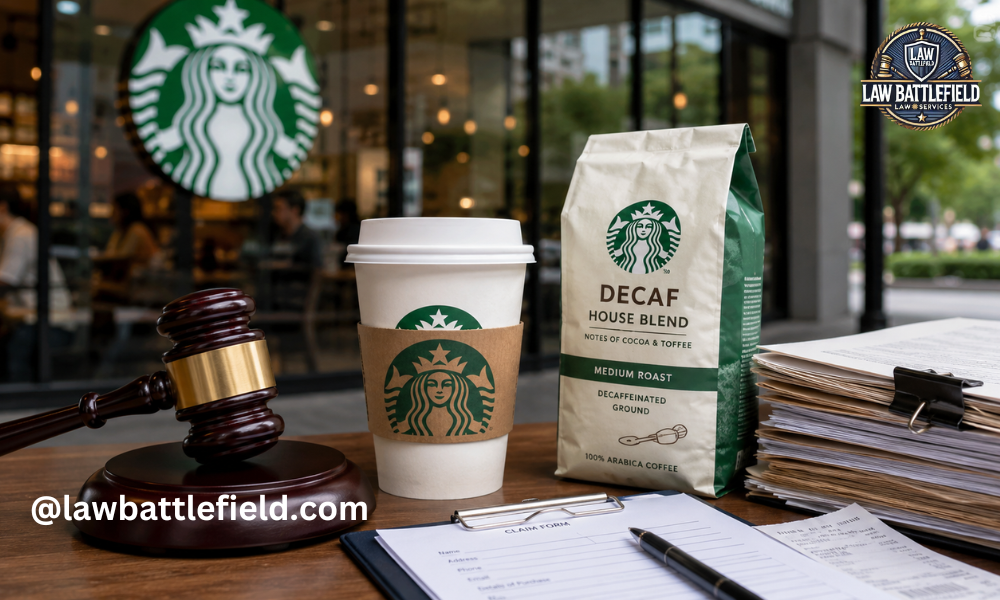
The Starbucks Lawsuit 2026 is getting attention because it involves two issues that matter to many everyday customers: what is inside Starbucks coffee products and how the company describes the way its coffee is sourced. The case is a proposed consumer class action that focuses on Starbucks’ “100% ethical sourcing” message, alleged supply-chain problems, and alleged volatile organic compounds, often called VOCs, in at least one Starbucks decaf coffee product.
The lawsuit was filed on January 13, 2026, in the U.S. District Court for the Western District of Washington. According to Hagens Berman, the law firm behind the case, the complaint accuses Starbucks of misleading consumers through ethical sourcing claims while also failing to disclose alleged chemical residues found in Starbucks’ Decaf House Blend medium roast coffee. Starbucks has denied the claims and has said its coffee products meet or exceed applicable safety standards.
This is why many readers are searching for terms such as Starbucks lawsuit 2026 update, Starbucks lawsuit 2026 how to join, Starbucks lawsuit claim form, and Starbucks lawsuit 2026 claim money. Customers want to know whether the case affects them, whether compensation may become available, and whether the allegations have been proven. At this stage, the most important thing to understand is that these are still lawsuit allegations, not final court findings.
Quick Guide Table
| Topic | Quick Details |
| Main Keyword | Starbucks Lawsuit 2026 |
| Case Type | Proposed consumer class-action lawsuit |
| Main Claims | Ethical sourcing, decaf VOC allegations, transparency concerns |
| Starbucks Response | Starbucks denies the allegations and says its products meet safety standards |
| Claim Form | No confirmed public settlement claim form yet |
| How to Join | Follow official legal updates and avoid unofficial claim links |
| Possible Money | Compensation is not guaranteed unless a settlement or court-approved claim process happens |
Step-by-Step Guide for Readers
- Understand the lawsuit first
The case is about allegations, not final court findings. - Check official updates
Use trusted legal sources, court records, or the law firm’s case page. - Keep purchase records
Receipts, online orders, or product details may help if a claim process opens. - Avoid fake claim forms
Do not enter personal information on random websites promising quick money. - Wait for court-approved claim details
A real claim form usually appears only after settlement or court approval.
Starbucks Lawsuit 2026 Update
The latest public information shows that the Starbucks consumer class action is still moving through the early stages of litigation. Hagens Berman’s case timeline lists the original complaint as filed on January 13, 2026, and a first amended complaint as filed on April 23, 2026. That means the case has not reached a final judgment or settlement based on the available public case information reviewed for this article.
The lawsuit was brought by consumers and focuses on people who bought Starbucks packaged coffee products in states such as Washington and New York. Daily Coffee News reported that two consumers filed the proposed class action alleging Starbucks misled shoppers with its ethical sourcing statements and failed to disclose alleged industrial solvents in at least one decaffeinated coffee product.
The case is getting public attention because it combines several sensitive topics in one lawsuit: food labeling, decaf coffee safety, corporate responsibility, labor standards, and consumer trust. For many customers, Starbucks is not just a coffee brand; it is a company that has built part of its public image around quality, sustainability, and responsible sourcing. When those claims are challenged in court, people naturally want clear updates.
Main Allegations in the Starbucks Lawsuit 2026
The main allegations in the Starbucks Lawsuit 2026 are based on the idea that customers may have paid for Starbucks coffee while relying on marketing messages they believed meant the products were ethically sourced and clearly labeled. The complaint challenges Starbucks’ statement that it is committed to “100% Ethical Coffee Sourcing,” arguing that the message may be misleading if farms connected to Starbucks’ supply chain had serious labor problems.
The lawsuit also claims that Starbucks did not properly disclose alleged VOCs in its Decaf House Blend medium roast coffee. Hagens Berman says independent testing detected methylene chloride, benzene, and toluene in the decaf product. The lawsuit argues that customers seeing “100% Arabica coffee” on the label may not expect any residual chemicals connected to processing, manufacturing, or packaging.
At the heart of the case is consumer choice. The plaintiffs are not only asking whether the coffee was safe or unsafe; they are also asking whether Starbucks gave shoppers enough information to make an informed buying decision. That distinction matters because consumer protection lawsuits often focus on whether marketing could mislead a reasonable buyer.
Starbucks VOC Lawsuit and Decaf Coffee Claims
The phrase Starbucks VOC lawsuit refers to the part of the case involving alleged volatile organic compounds in Starbucks decaf coffee. VOCs are a broad group of chemicals that can evaporate into the air, and different VOCs can have different uses and health concerns. The U.S. Environmental Protection Agency explains that health effects from VOCs vary widely depending on the chemical, the amount, and the exposure, and some organic compounds are suspected or known to cause cancer in humans.
In this lawsuit, the alleged testing results listed by Hagens Berman include methylene chloride at 22 parts per billion, benzene at 28 parts per billion, and toluene at 87 parts per billion in Starbucks Decaf House Blend medium roast. These numbers are part of the plaintiffs’ allegations and should be treated as claims in an active case, not as final court-confirmed facts.
Decaf coffee is part of the lawsuit because some decaffeination methods use solvents to remove caffeine from coffee beans. One important point is that U.S. federal food rules separately allow methylene chloride residue in decaffeinated roasted coffee and instant coffee extract up to 10 parts per million. That regulation does not automatically decide this lawsuit, but it helps explain why the legal debate is about labeling, disclosure, testing, consumer expectations, and safety standards—not just the presence of a chemical name alone.
Is This a Starbucks Cancer Lawsuit?
Some people search for Starbucks lawsuit 2026 cancer lawsuit because chemicals such as benzene and methylene chloride are often discussed in connection with cancer risk. However, it is more accurate to describe this case as a consumer protection and labeling lawsuit involving alleged toxic chemical disclosure issues, not as a proven cancer injury case.
The lawsuit does not mean a court has found that Starbucks decaf coffee caused cancer. It also does not mean every person who drank Starbucks decaf has a health claim. The current case focuses on what Starbucks allegedly represented to consumers, what it allegedly failed to disclose, and whether customers would have made different purchasing choices if they had known more.
This careful distinction is important for readers. VOCs can raise real health questions, but responsible reporting should not turn allegations into medical conclusions. The EPA notes that VOC health effects depend on many factors, including the type of compound and exposure level. Because of that, anyone with a personal health concern, pregnancy-related concern, or chemical exposure concern should speak with a qualified medical professional instead of relying only on online discussions.
Ethical Sourcing Claims and Supply Chain Concerns
Another major part of the Starbucks Lawsuit 2026 involves the company’s ethical sourcing message. Starbucks has long used language around responsible coffee sourcing, and many customers may understand that to mean the company is monitoring farms, labor conditions, and supplier behavior. The lawsuit argues that this message may be misleading if certified farms connected to Starbucks’ C.A.F.E. Practices program were linked to serious labor violations.
According to Hagens Berman’s case page, the complaint alleges that some C.A.F.E. Practices-certified farms had dangerous working conditions, poor living conditions, lack of proper protective gear, and violations of local labor laws. The complaint further alleges that Starbucks did not adequately disclose what was being done to address these issues when the company was notified of them.
For consumers, this part of the case is about trust. Many people choose products based not only on price and taste, but also on whether a company appears to treat workers fairly. If a brand uses strong ethical language, customers may expect that the company can back it up with strong oversight and clear transparency.
Starbucks’ Response to the 2026 Lawsuit
Starbucks has denied the allegations. In a statement reported by Delish, a Starbucks representative said the company takes the claims seriously but believes they are inaccurate. The company also said it maintains visibility into its supply chain, audits farms regularly, and takes action when violations are reported, including ending supplier relationships when needed. Starbucks also said the safety and quality of its coffee is a top priority and that its products meet or exceed applicable safety standards.
This response matters because readers should hear both sides. The plaintiffs are making serious allegations, but Starbucks has not admitted wrongdoing. A lawsuit is a legal process where claims are tested through filings, evidence, arguments, and sometimes settlement discussions or trial.
For now, the most balanced way to understand the case is this: consumers have accused Starbucks of misleading marketing and insufficient disclosure, while Starbucks says the claims are inaccurate and its products comply with safety standards. Until a court rules or the parties reach a settlement, readers should avoid treating either side’s statements as the final answer.
Starbucks Lawsuit 2026: How to Join
Many people searching for Starbucks lawsuit 2026 how to join want to know whether they can become part of the case. In a proposed class action, consumers usually do not “join” immediately in the same way they might sign up for a private lawsuit. First, the court may need to decide whether the case can proceed as a class action. If a settlement or court-approved claims process happens later, eligible consumers may receive instructions on how to file a claim.
Based on public information reviewed for this article, there is no confirmed court-approved settlement claim process for consumers yet. Hagens Berman’s case page describes consumer rights and gives information about the lawsuit, but that is different from a final settlement claim form.
Potential eligibility may depend on details such as where a person lives, which Starbucks products they bought, when they bought them, and whether the court approves a class covering those purchases. Customers should not assume they will automatically receive money. Class actions can take months or years, and some cases are dismissed, settled, narrowed, or changed before consumers ever file claims.
Starbucks Lawsuit 2026 How to Join Online
People searching for Starbucks lawsuit 2026 how to join online should be careful. High-profile lawsuits often attract unofficial websites, social media posts, and forms that may not be connected to the court or the law firms involved. Some may collect personal information before any real claim process exists.
The safest approach is to follow official or reliable sources. That may include the law firm’s case page, court records, or trusted legal news outlets. If a settlement is approved later, official settlement websites usually include clear details about who qualifies, what documents are needed, filing deadlines, payment options, and contact information for the settlement administrator.
Consumers should be careful with any website that promises guaranteed payment, asks for unnecessary sensitive information, or claims that money is already available without linking to a court-approved settlement. In a case like this, patience matters. A real claim process normally becomes available only after a settlement agreement, court approval steps, and formal notice to affected consumers.
Starbucks Lawsuit Claim Form and Claim Money
At this time, readers looking for a Starbucks lawsuit claim form or Starbucks lawsuit 2026 claim money should understand that a claim form is not the same thing as a lawsuit announcement. A claim form usually appears only after a settlement has been reached and approved enough for consumers to submit claims. The public materials reviewed for this article show an active consumer class action, not a completed settlement with guaranteed payments.
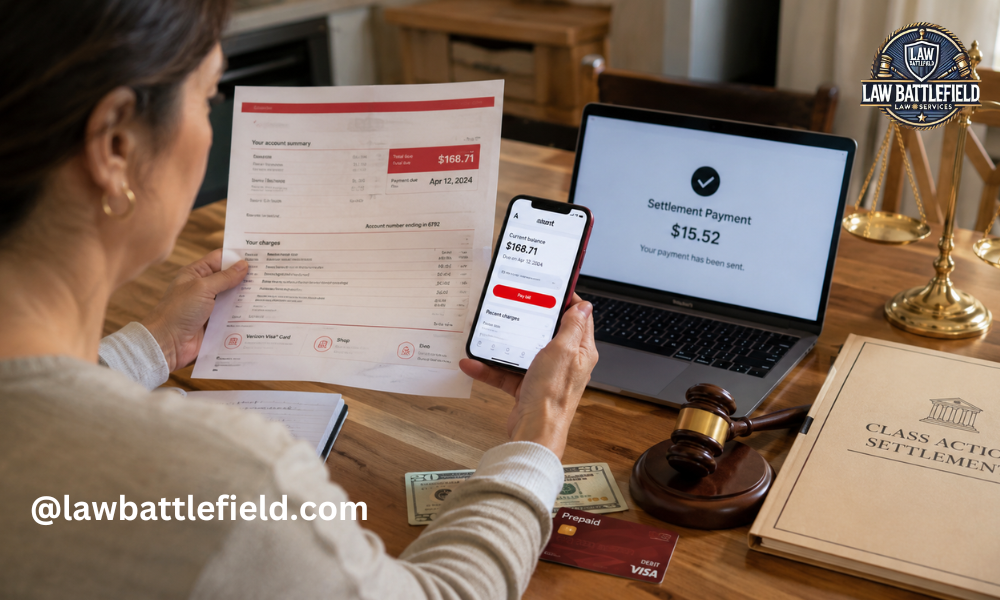
If the case eventually settles, the claim form may ask for basic information such as name, address, contact details, product purchase information, and possibly proof of purchase. Some consumer settlements allow claims without receipts, while others require documentation. The rules depend on the final settlement terms.
Receiving claim money is also not immediate. Even after a settlement is announced, there may be notice periods, objection deadlines, court approval hearings, claim review, and payment processing. That is why readers should be cautious with headlines that make it sound like payment is already guaranteed. For now, the better approach is to follow verified updates and keep any purchase records that may be useful later.
Other Starbucks Legal Updates in 2026
The main Starbucks Lawsuit 2026 discussed in this article is the consumer class action about ethical sourcing and alleged decaf VOC disclosure. However, Starbucks has also been involved in other legal matters around the same period, and readers may see these cases mixed together online.
In February 2026, a federal judge dismissed a lawsuit brought by Missouri’s attorney general challenging Starbucks’ diversity, equity, and inclusion programs. HR Dive reported that the judge found the state lacked standing and that the court lacked subject matter jurisdiction, while also finding that the plaintiffs failed to state a claim.
In June 2026, a former Starbucks store manager filed an age discrimination lawsuit in federal court in South Carolina. According to Human Resources Director, the 55-year-old former manager claimed he was pushed out because of his age and brought a claim under the Age Discrimination in Employment Act.
There is also the separate hot drink injury case involving a $50 million jury verdict in California. A Los Angeles judge rejected Starbucks’ attempt to reduce or invalidate that verdict in June 2025, and Starbucks had argued the award was excessive. These cases are separate from the 2026 consumer class action and should not be treated as one combined lawsuit.
What Consumers Should Do If They Bought Starbucks Decaf
If you bought Starbucks decaf coffee and are concerned about the lawsuit, the first step is to stay calm and avoid relying on rumors. The case is still based on allegations, and no final court ruling has confirmed that Starbucks violated the law in the way the plaintiffs claim.
It may be helpful to keep receipts, online order records, product packaging, loyalty account purchase history, or store purchase details if you still have them. These records could matter if a claim process opens later, although there is no guarantee they will be required.
Consumers who are worried about ingredients or decaf processing can read labels more carefully and look for decaf products that clearly state the decaffeination method, such as Swiss Water Process or carbon dioxide processing. People with health concerns, pregnancy-related questions, or chemical sensitivity concerns should speak with a medical professional. People with legal questions should contact a qualified attorney or follow official case updates.
Starbucks Lawsuit 2026 Reddit and Online Discussions
Search interest around Starbucks lawsuit 2026 Reddit shows that many people are trying to understand the case through social media and community discussions. That is normal, especially when a lawsuit involves a familiar brand and common consumer products. Reddit threads and social media posts can be useful for seeing what questions people are asking, but they should not be treated as official updates.
Common questions include whether Starbucks decaf is safe, whether customers can join online, whether a claim form exists, whether this is a cancer lawsuit, and whether Starbucks will pay customers. These are reasonable questions, but the answers can change as the case moves forward.
The best way to separate real updates from rumors is to look for dates, sources, and court-related details. A reliable update should explain whether the information comes from a complaint, a court order, a company statement, a settlement notice, or a law firm page. Posts that promise fast money, guaranteed checks, or secret claim links should be treated carefully.
Conclusion
The Starbucks Lawsuit 2026 is an important consumer case because it raises questions about ethical sourcing claims, supply-chain transparency, product labeling, and alleged VOCs in Starbucks decaf coffee. The lawsuit claims that customers may have been misled by Starbucks’ “100% ethical sourcing” message and by product labeling that allegedly did not disclose certain chemical residues. Starbucks denies the allegations and says its products meet or exceed applicable safety standards.
For now, readers should remember that this is an ongoing legal process. There is no confirmed public settlement claim form or guaranteed claim money based on the available information reviewed for this article. Anyone searching for Starbucks lawsuit 2026 how to join or Starbucks lawsuit 2026 how to join online should follow official case updates and avoid suspicious websites.
The most balanced takeaway is simple: the case is serious, but it is not finished. Customers should stay informed, keep useful purchase records if they have them, and rely on verified legal updates before making decisions about joining, filing a claim, or believing online compensation rumors.
FAQs
What Is The Starbucks Lawsuit 2026 About?
The Starbucks Lawsuit 2026 involves allegations about ethical sourcing claims, supply-chain transparency, and alleged VOCs in some decaf coffee products. Starbucks has denied the claims.
Is There A Starbucks Lawsuit Claim Form Available?
At this stage, there is no confirmed public settlement claim form. Readers should follow official case updates before submitting personal information anywhere online.
Can I Join The Starbucks Lawsuit 2026 Online?
You may be able to follow or register interest through official legal sources, but eligibility depends on the case status, court decisions, and any future settlement process.
Is The Starbucks Lawsuit 2026 A Cancer Lawsuit?
It is better described as a consumer labeling and transparency lawsuit involving alleged chemical disclosure issues, not a proven cancer injury lawsuit.
Will Customers Get Money From The Starbucks Lawsuit 2026?
Claim money is not guaranteed. Payment would usually depend on a settlement, court approval, eligibility rules, and a valid claim process.
Was this article helpful? Check out more on Lawbattlefield.com
Disclaimer: This article is for informational purposes only and does not provide legal, medical, or financial advice. The Starbucks Lawsuit 2026 involves ongoing allegations, and no final outcome should be assumed. Readers should check official legal sources or speak with a qualified professional for personal guidance.