
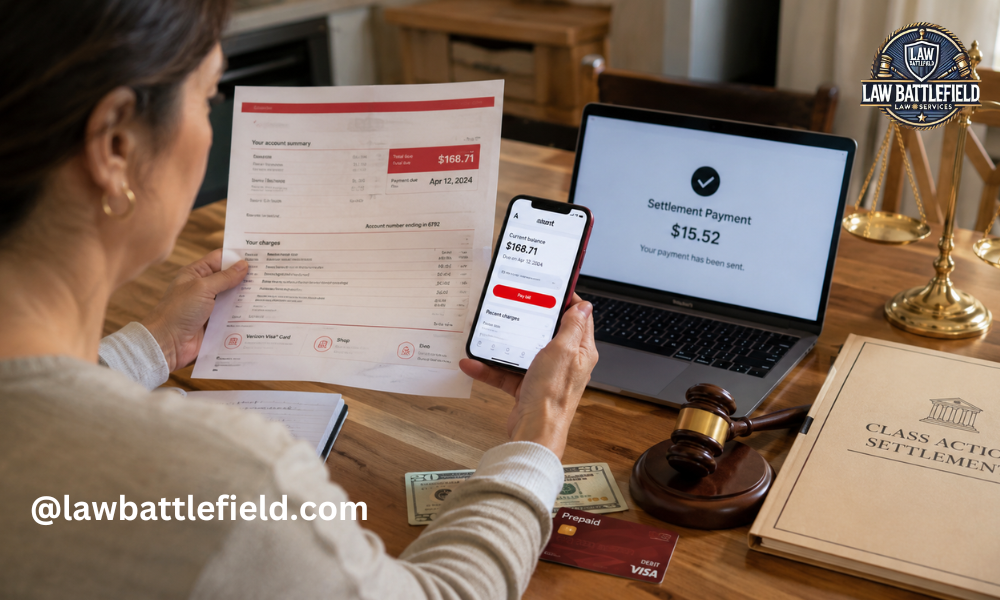
The Verizon Class Action Settlement resolved claims that Verizon Wireless charged certain postpaid customers an Administrative Charge or an Administrative and Telco Recovery Charge without adequately including the fee in its advertised plan prices. Verizon denied that the charges were unfair or improperly disclosed, but it agreed to create a $100 million settlement fund to resolve the dispute without continuing the litigation.
Although early settlement notices discussed possible payments ranging from $15 to $100, those figures were initial allocations rather than guaranteed final payments. After millions of valid claims were approved and settlement expenses were taken from the fund, the amount available for each claimant had to be reduced. Some customers later reported receiving only a few dollars.
The deadline to submit a claim was April 15, 2024. That deadline has passed, and new claims are not being accepted. For people searching in 2026, the main issues are the final payment amounts, the distribution process, missing payments and confusion about whether another Verizon settlement is currently open.
Verizon Class Action Settlement Quick Guide
| Detail | Information |
| Case name | Esposito et al. v. Cellco Partnership d/b/a Verizon Wireless |
| Total settlement fund | $100 million |
| Reason for the lawsuit | Claims that Administrative Charges were not clearly included in advertised postpaid plan prices |
| Eligibility period | January 1, 2016, through November 8, 2023 |
| Who could qualify | Current and former U.S. postpaid wireless or data customers who paid the disputed charge |
| Claim deadline | April 15, 2024 |
| Original payment formula | $15 plus $1 for each qualifying service month, up to $100 before reductions |
| Why payments were reduced | The available net fund was shared among a large number of approved claimants on a pro-rata basis |
| Payment distribution | Electronic and mailed payments began around January 2025 |
| 2026 status | The filing period is closed, and no new claims are being accepted for this settlement |
Key Points for Claimants
- A payment of $100 was the possible maximum, not a guaranteed amount.
- Only customers who submitted valid claims before April 15, 2024, could receive money.
- Final payments were reduced after expenses and the pro-rata adjustment.
- A small payment does not necessarily mean that the claim was processed incorrectly.
- Claimants with missing or inaccessible payments should contact the official settlement administrator.
- No payment fee should be required to receive legitimate settlement money.
Verizon Class Action Settlement at a Glance
The official case was titled Esposito et al. v. Cellco Partnership d/b/a Verizon Wireless, Docket No. MID-L-6360-23, in the Superior Court of New Jersey. It covered certain current and former Verizon account holders in the United States who received postpaid wireless or data services and paid one of the disputed administrative charges between January 1, 2016, and November 8, 2023.
Verizon agreed to provide a $100 million fund. That money was not reserved only for customer payments. The fund also covered court-approved legal fees, notice and administration expenses, service awards and other permitted costs. The settlement notice stated that class counsel could request up to $33.3 million in legal fees, plus expenses, from the fund.
The settlement received final approval on April 26, 2024. A later court filing described approximately 5.2 million claimant class members and amended the distribution schedule so payments could be sent on or before January 6, 2025. Customers began publicly reporting payments around January 7, 2025.
Why the Verizon Class Action Lawsuit Was Filed
The lawsuit focused on monthly charges listed on some Verizon bills as an Administrative Charge or Administrative and Telco Recovery Charge. The customers bringing the case argued that these charges increased the real cost of postpaid plans and were not adequately presented as part of the price customers expected to pay.
In simple terms, the plaintiffs believed Verizon advertised one monthly plan price and then added a company-controlled fee later. Their complaint was not that every fee on a phone bill is automatically unlawful. Instead, they questioned how this particular fee was described and disclosed during the sales and billing process.
Verizon rejected those allegations. The company maintained that it disclosed the charge in its customer materials and billing information and that the fee helped recover certain regulatory, network and business expenses. It also said it had the right to continue charging and changing the fee.
A settlement does not mean a court found Verizon liable after a trial. Companies may settle to control costs, remove uncertainty and end long-running litigation. Verizon continued to deny wrongdoing even after agreeing to the settlement.
Who Qualified for the Verizon Settlement
The settlement class generally included people in the United States whose last known billing address was in the country and who held a qualifying Verizon postpaid wireless or data account. They also needed to have been charged and to have paid an Administrative Charge or Administrative and Telco Recovery Charge during the settlement period.
The relevant period ran from January 1, 2016, through November 8, 2023. Both former and current customers could qualify, provided their account met the class definition and they submitted a valid claim before the deadline.
Prepaid customers were not covered simply because they used Verizon. The settlement specifically concerned postpaid services, where customers typically receive a bill after using the service. People who requested exclusion from the settlement were also not eligible for a settlement payment. Certain people connected to Verizon or the court were excluded under the settlement terms as well.
Eligibility alone did not automatically produce a payment. A class member needed to file a valid claim by April 15, 2024. Someone who may have qualified but never submitted a claim cannot now file a late application through a new website or My Verizon account.
Important Settlement Dates and Legal Timeline
The charges covered by the settlement were those paid between January 1, 2016, and November 8, 2023. After the proposed agreement was announced, class members had until February 20, 2024, to exclude themselves and until February 26, 2024, to object or comment on the proposed settlement.
The court held its fairness hearing on March 22, 2024. Final approval was entered on April 26, 2024. The claim deadline remained April 15, 2024, meaning customers had to file while the final court process was still moving forward.
An appeal was filed after approval, which delayed the settlement from becoming fully effective. Public settlement updates reported that the remaining appeal was withdrawn on September 20, 2024. A November court order then changed the payment schedule. The order noted that sending millions of payments during the holiday season could cause lost or delayed payments and allowed distribution by January 6, 2025.
The most important point for readers is that no new Verizon Administrative Charge settlement claims are being accepted in 2026.
Verizon Class Action Settlement: How Much Will I Get?
People searching “Verizon class action settlement how much will I get” should understand that the advertised maximum of $100 was never guaranteed. The settlement created a formula for calculating an initial allocation, but that figure could be lowered if the approved claims exceeded the net money available.
The original calculation began with $15 for a valid claimant account. Another $1 was added for each month in which the account received qualifying postpaid service and paid the disputed charge. The initial amount could not exceed $100.
For example, an account with 20 qualifying months would initially be assigned $35. An account with enough qualifying months could reach the $100 cap. However, those figures were calculated before the required pro-rata adjustment.
The court-approved settlement agreement allowed all payments to be reduced by the same percentage when the combined initial allocations were greater than the net distributable funds. Therefore, two claimants with different service histories could receive different amounts, but both could experience a substantial reduction from their original calculations.
How the Verizon Class Action Settlement Amount Was Calculated
The payment process involved two main stages. First, the administrator calculated each claimant’s initial amount using the $15 base allocation, qualifying months and $100 cap. Second, the administrator compared the total value of all valid claims with the money remaining after approved settlement expenses.
The full $100 million was the gross settlement fund. It was not the final amount divided among customers. Legal fees, litigation expenses, the cost of notifying class members, claim-processing costs and other approved amounts had to be paid from the fund before the remaining money could be distributed.
The large number of approved claims was especially important. The November 2024 distribution order referred to approximately 5.2 million claimant class members. When millions of people share a fixed fund, even a settlement worth $100 million can produce relatively small individual payments.
The settlement agreement addressed this situation directly: if the combined payments calculated for all valid accounts exceeded the available net funds, every claimant’s amount would be reduced on a pro-rata basis. That provision is the main reason the final deposits did not match the original $15-to-$100 estimates.
Why Many Verizon Settlement Payouts Were Lower Than Expected
Many customers interpreted the $15 figure as a guaranteed minimum. In practice, it was the initial minimum allocation before the pro-rata adjustment. The settlement’s reduction clause meant that the actual amount could fall below $15 if there was not enough money to pay every approved claimant’s full calculated allocation.
CBS News reported that some customers received considerably less than expected. One reported payment was a prepaid Mastercard worth $2.37, while other claimants posted payments of only a few dollars. These individual reports do not show what every customer received, but they demonstrate how strongly the pro-rata adjustment affected the distribution.
A small payout does not automatically mean the administrator incorrectly processed the claim. It may simply reflect the same percentage reduction applied to millions of approved claims. The claimant’s qualifying service period also mattered, because accounts with fewer eligible months started with a smaller allocation.
Customers who believe their payment was calculated incorrectly should rely on their claim confirmation and contact the settlement administrator. Verizon customer service may not have access to the separate settlement administrator’s records.
Verizon Class Action Settlement Payout Date and Payment Methods
The original plan called for payments to be distributed by early December 2024. The court later approved a revised schedule allowing the administrator to send the money on or before January 6, 2025. News reports on January 7 confirmed that electronic payments had begun reaching customers.
Claimants were able to choose from several payment methods when submitting their forms. The claim materials included PayPal, Venmo, Zelle, a virtual prepaid card and, in some versions of the form, electronic bank transfer or a mailed check.
Not every payment arrived at the same moment. Electronic services process transfers differently, and mailed checks naturally require additional delivery time. Incorrect contact details, closed payment accounts, spam filtering and returned mail could also affect delivery.
Before deciding that a payment was missed, a claimant should review the email address and payment account used on the original claim, search email folders for settlement messages, check transaction histories around January 2025 and examine physical mail received during that period.
Verizon Class Action Settlement Status in 2026
As of 2026, the Administrative Charge settlement is a closed settlement rather than a new claim opportunity. Final approval was entered in April 2024, the remaining reported appeal was withdrawn in September 2024 and the court-authorized distribution took place around January 2025.
The available public materials do not show that the claim window has been reopened. A page or social media post using phrases such as “Verizon class action lawsuit 2026” should not be treated as proof that customers can currently apply for this settlement.
It is also important to separate the status of the overall settlement from the status of an individual payment. The main distribution has already occurred, but a claimant could still have a personal issue involving a returned check, an inaccessible virtual card, incorrect contact information or unclaimed property procedures.
Other lawsuits involving Verizon may exist, but they are not automatically part of the Esposito Administrative Charge settlement. Readers should compare the case name, disputed conduct, eligibility period and claim deadline before assuming that a newer headline concerns the same case.
Verizon Class Action Settlement Website and Login Guidance
The official case website was called the Verizon Administrative Charge Settlement website and used the domain VerizonAdministrativeChargeSettlement.com. It contained the claim form, settlement notice, agreement, court documents, deadlines and administrator contact information.
The settlement website login was not the same as a My Verizon login. Eligible customers received a mailed or emailed settlement notice containing identification information, commonly described as a Notice ID, Personal ID or Confirmation Code. Those details were used to access or complete the settlement claim process.
Because the filing deadline has passed, the former “Submit Claim” function may be closed or unavailable. Entering normal Verizon account credentials on an unofficial settlement page would not create a valid claim and could expose personal information.
The official notice listed the administrator’s toll-free number as 844-689-0186 and the contact email as info@VerizonAdministrativeChargeSettlement.com. Claimants should confirm contact information through official case materials before sharing a claim number or personal details.
Missing Payments, Expired Cards, and Settlement Scam Warning Signs
A person who filed on time but cannot find a payment should first locate the original claim confirmation. It can help establish the submitted contact information, selected payment method and whether the claim was successfully received.
For electronic payments, claimants should check PayPal, Venmo, Zelle and any email used to receive a virtual prepaid card. They should also search spam, junk and deleted folders for messages containing the settlement name. For mailed payments, it may be useful to review old mail records and confirm whether the address on the claim was current.
If a check, prepaid card or payment link has expired, the claimant should contact the administrator and explain the issue. Reissue rights can depend on the settlement terms, the type of payment and the time that has passed. Some uncashed or undeliverable settlement funds may eventually be handled under state unclaimed-property procedures rather than remaining available for an ordinary reissue.
A legitimate settlement administrator should not require a claimant to pay an upfront fee to release settlement money. Unexpected messages requesting passwords, full banking login details, gift cards or cryptocurrency should be treated as suspicious. Claimants should not use contact information supplied only in an unsolicited message.
Verizon Class Action Settlement 2021 and 2026 Search Confusion
Some readers search for “Verizon class action settlement 2021” because related federal litigation began before the final nationwide agreement. One related case, MacClelland v. Cellco Partnership, was filed in federal court in 2021 and involved allegations concerning Verizon’s Administrative Charge. The later nationwide settlement was approved under the Esposito case in New Jersey.
This can make the timeline appear inconsistent. The dispute may be connected to litigation that began in 2021, but the Administrative Charge settlement notice was issued later, the covered billing period ended in November 2023, claims were due in April 2024 and payments were distributed in January 2025.
Likewise, the phrase “Verizon class action lawsuit 2026” often reflects a person searching for a current update rather than the filing year of this particular settlement. It does not change the original eligibility period or reopen the deadline.
The safest way to identify the case is to check the complete name: Esposito et al. v. Cellco Partnership d/b/a Verizon Wireless, Docket No. MID-L-6360-23. A different title, court number or allegation may point to an unrelated legal action.
What the Settlement Changed for Verizon Customers
The agreement did not require Verizon to stop charging the Administrative and Telco Recovery Charge. Instead, Verizon agreed to revise its customer agreement language to provide clearer information about the fee.
The revised language was designed to explain that the charge is separate from the plan price, is not a tax, is not required by law, may be kept by Verizon in whole or in part and may change over time.
This distinction is important. The Verizon Class Action Settlement provided cash payments to approved claimants, not automatic bill credits for every customer. It also did not guarantee that current or future bills would no longer contain an administrative fee.
Customers who want to understand their present charges should review the detailed fee section of each billing statement rather than relying only on the advertised plan price. Keeping copies of bills, plan confirmations, customer agreements and notices can also make it easier to question a charge or support a future complaint.
Conclusion
The Verizon Class Action Settlement created a $100 million fund to resolve allegations involving Administrative Charges on postpaid wireless and data accounts. It generally covered qualifying charges paid between January 1, 2016, and November 8, 2023, but customers had to submit valid claims by April 15, 2024. Verizon denied wrongdoing, and the settlement did not require the company to eliminate the charge.
Payments were initially calculated using a $15 base amount, $1 for each qualifying service month and a $100 cap. However, those initial allocations were reduced because millions of valid claims shared the net fund remaining after approved expenses. That is why many claimants received much less than the amounts highlighted in early settlement notices.
Payment distribution began around January 2025. Anyone with an unresolved payment should use official case records and administrator contact details rather than unofficial websites or social media posts. The claim period is closed, so customers who did not file before the deadline cannot submit a new claim for this particular settlement in 2026.
Frequently Asked Questions
How Much Could I Receive From The Verizon Class Action Settlement?
Approved payments started with $15 plus $1 for each qualifying service month, capped at $100. These initial amounts were later reduced through the court-approved pro-rata calculation.
When Was The Verizon Settlement Payout Date?
Payments began reaching approved claimants in January 2025. Electronic deposits generally arrived first, while mailed checks and prepaid cards could take longer to arrive or activate.
Can I Submit A Verizon Settlement Claim In 2026?
No. The deadline to submit a claim was April 15, 2024. The filing period has not been reopened, so new claims are not being accepted in 2026.
Why Was My Verizon Settlement Payment So Small?
Millions of approved claims shared the remaining settlement money after court-approved expenses. The resulting pro-rata reduction meant that some customers received only a few dollars instead of the earlier estimates.
Is The Settlement Website Login Connected To My Verizon?
No. The settlement process used a separate Notice ID and Confirmation Code. Claimants should never enter their My Verizon password or pay someone to access settlement funds.
Was this article helpful? Check out more on Lawbattlefield.com
Disclaimer: This article is provided for general informational purposes only and does not offer legal or financial advice. Settlement dates, payment records and individual claim issues should be confirmed through official court documents or the authorized settlement administrator.
Meaningful Beauty Lawsuit: What The Legal Claims, Settlements, And Customer Complaints Really Reveal