
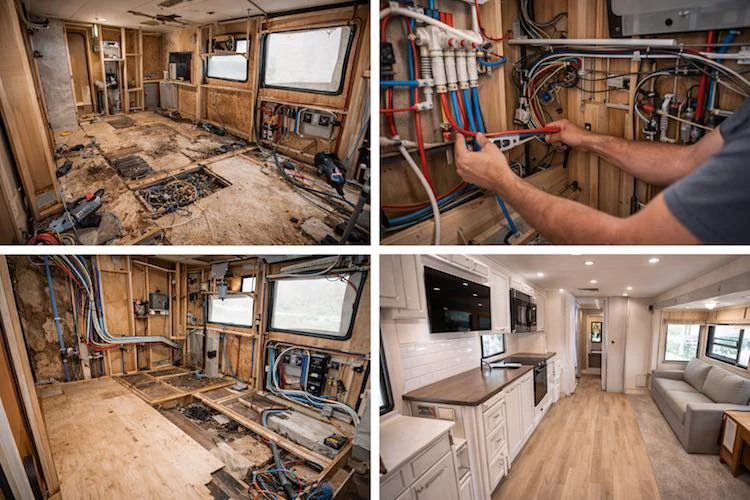
RV renovation is not about cosmetic updates or trendy interiors. A proper renovation restores functionality, safety, and long-term reliability. Many RVs look refreshed on the surface but hide serious problems underneath because renovation was approached like home remodeling instead of vehicle reconstruction.
A good RV renovation always starts with systems and structure, not finishes.
Renovation Vs Repair: The Key Difference
RV repair focuses on fixing a specific problem. RV renovation looks at the entire coach and improves it as a whole. Renovation often includes repairs, but it also updates outdated systems, corrects design flaws, and adapts the RV to how it will actually be used.
Replacing flooring without checking for water damage is repair done badly. Rebuilding the floor after fixing leaks and improving insulation is renovation done correctly.
Inspection Before Any Renovation Work
Before demolition or upgrades, the RV must be inspected. Roof, windows, slide-outs, floors, electrical systems, plumbing, suspension, and chassis condition all matter. Renovation without inspection usually means tearing things apart twice.
Water damage, outdated wiring, weak floors, and failing sealants should always be addressed before any interior work begins.
Structural And Safety Work Comes First
The first phase of RV renovation should always focus on structure and safety. This includes roof repairs, resealing, floor reinforcement, slide alignment, suspension service, brakes, and tires.
No interior upgrade makes sense if the RV is not structurally sound or safe to drive. Skipping this step is the most common renovation mistake.
Electrical And Plumbing Upgrades
Older RVs often struggle with modern power demands. Renovation is the right time to upgrade converters, battery systems, wiring, outlets, and charging solutions. Plumbing upgrades usually include replacing aging lines, improving access to valves, and making the system easier to winterize.
These changes are rarely visible but dramatically improve daily usability.
Interior Renovation With Purpose
Interior renovation should be driven by function, not trends. Layout improvements, storage optimization, cabinet repair or replacement, flooring upgrades, and insulation improvements all matter more than decorative finishes.
Materials must be lightweight, durable, and compatible with RV movement. Residential materials often fail quickly in RV environments.
Weight And Balance Considerations
Every renovation adds weight. Cabinets, flooring, batteries, appliances, and furniture all contribute. Weight distribution affects handling, braking, and long-term wear.
A proper RV renovation considers weight limits and balance at every stage, not after everything is installed.
Diy Renovation Vs Professional Renovation
DIY renovation works well for owners with time, skills, and realistic expectations. Professional renovation costs more but usually delivers better system integration and fewer long-term issues.
Many successful projects use a hybrid approach, with structural, electrical, and safety-critical work handled professionally and cosmetic work done by the owner.
Rv Renovation By Custom-way
For owners who want an RV renovation that actually improves reliability and usability, experienced specialists like Custom-way approach renovation as a complete system rebuild. They focus on structure, electrical systems, water management, and long-term durability before appearance.
This prevents the common situation where an RV looks renovated but still behaves like a problem machine.
When Full Renovation Makes Sense
Full RV renovation makes sense when the base structure is solid and the RV layout still fits your needs. It often does not make sense when water damage is widespread or the cost exceeds the RV’s real value.
An honest assessment early in the process saves time and money.