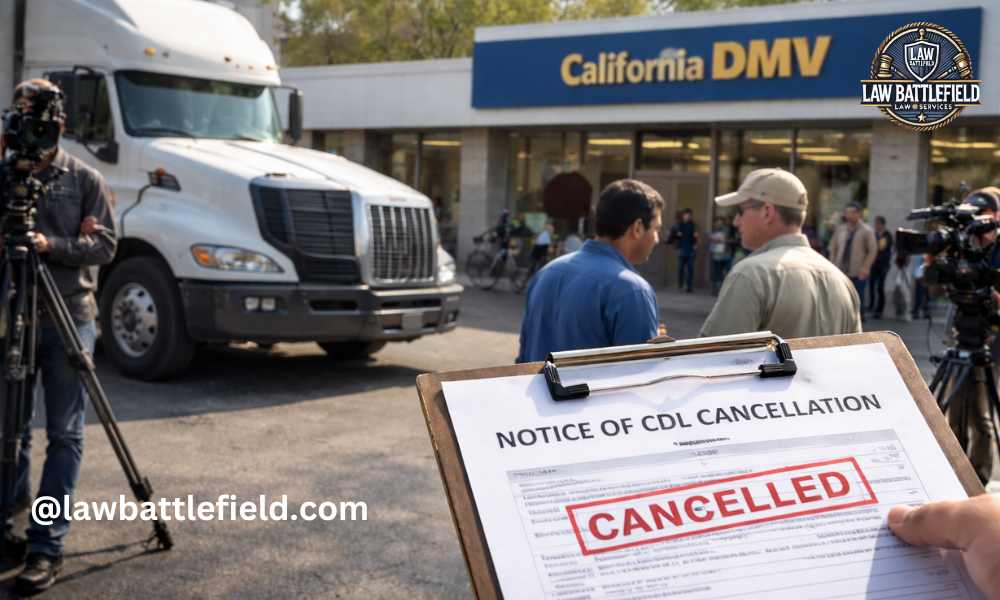
The California DMV CDL cancellation lawsuit has become a major topic in recent months, especially among commercial drivers and industry professionals. At its core, this case is about the sudden cancellation of thousands of commercial driver’s licenses (CDLs) issued to non-domiciled drivers in California. These are drivers who live in the United States temporarily but are legally allowed to work and drive commercial vehicles.
The lawsuit, known as Doe v. Department of Motor Vehicles, was filed in late 2025 by advocacy groups such as the Sikh Coalition and the Asian Law Caucus. They argue that the California Department of Motor Vehicles (DMV) acted unfairly by canceling licenses without giving drivers enough notice or a proper chance to fix any issues.
This issue has gained widespread attention because it affects between 13,000 and 21,000 drivers. Many of them are essential workers who help keep goods moving across the country. For these drivers and their families, losing a CDL is not just an administrative issue — it directly impacts their income and daily life.
California DMV CDL Cancellation Lawsuit (2026 Overview)
| Topic | Details |
| Case Name | Doe v. Department of Motor Vehicles |
| Filed | December 2025 |
| Main Issue | Cancellation of non-domiciled CDLs |
| Affected Drivers | 13,000–21,000 |
| Who Is Affected | Immigrant & non-domiciled drivers (many Punjabi Sikh truckers) |
| Key Legal Claim | Lack of due process & unfair cancellations |
| Reason Behind Action | Federal audit & compliance pressure |
| Funding Risk | $160 million highway funding |
| Cancellation Date | March 6, 2026 |
| Current Status | Licenses canceled; lawsuit ongoing |
| Reapply Option | Allowed, but limited |
| FMCSA Role | Pause on new non-domiciled CDL issuance |
| Temporary Relief | Class C license available (non-commercial driving) |
| Industry Impact | Supply chain disruption & driver shortage |
| Future Outlook | Policy changes possible depending on court decision |
What Led to the California DMV CDL Cancellation Decision
To understand the California DMV CDL cancellation lawsuit, it’s important to look at the background. California allows certain non-domiciled individuals to hold CDLs if they meet specific requirements. These licenses are often tied to the driver’s legal work authorization in the United States.
Problems began after a federal audit raised concerns about whether California was properly aligning CDL expiration dates with drivers’ legal status. Federal authorities pushed the state to make changes, emphasizing that licenses should not extend beyond a person’s authorized stay.
Over time, this pressure increased. Reports suggest that the federal government warned California it could lose significant highway funding if it did not comply. Eventually, the DMV began reviewing thousands of CDL records and identified what it believed were inconsistencies.
This review led to a large-scale decision to cancel many non-domiciled CDLs. The process moved quickly, and by early March 2026, the cancellations were officially carried out.
How Many Drivers Are Affected and Who They Are
The scale of the California DMV CDL cancellation is one of the reasons the lawsuit has drawn so much attention. Estimates suggest that between 13,000 and 21,000 drivers were affected.
Most of these drivers are non-domiciled workers, meaning they do not have permanent residency but are legally allowed to work in the United States. Many are experienced truck drivers who have been working in the industry for years.
A large number of affected drivers come from the Punjabi Sikh community. This group plays a major role in the trucking industry, particularly in California and other parts of the country. Their contribution is vital to supply chains, especially in transporting goods across long distances.
For many of these individuals, driving is not just a job — it is their primary source of income. Losing a CDL can mean immediate unemployment, making the situation both an economic and social concern.
Key Legal Issues Behind the CDL Cancellation Lawsuit
The California DMV CDL cancellation lawsuit raises several important legal questions. One of the main concerns is whether the DMV followed proper procedures before canceling the licenses.
Plaintiffs argue that drivers were not given a fair chance to respond. In many cases, they say drivers did not receive clear notices or enough time to correct possible errors in their records. This has led to claims that the DMV violated basic due process rights.
Another issue is whether the DMV followed state administrative rules. Lawsuits like this often focus on whether government agencies acted within their legal authority. Advocacy groups claim that the DMV’s actions were rushed and did not meet required standards.
At the center of the case is a simple question: should drivers lose their licenses without a clear and fair process? The outcome of this legal battle may set an important precedent for how similar cases are handled in the future.
Clerical Errors and Compliance Confusion in CDL Records
One of the most debated aspects of the California DMV CDL cancellation lawsuit is the role of clerical errors. According to the lawsuit, many drivers who were actually in compliance still had their licenses canceled.
In some cases, the expiration date on a driver’s CDL already matched their work authorization. However, due to mismatches in records or administrative mistakes, these licenses were still flagged for cancellation.
These types of errors can happen when different systems do not communicate properly. For example, immigration records and DMV databases may not always update at the same time. Even a small delay or inconsistency can lead to serious consequences.
Drivers affected by these errors often had little opportunity to correct them before their licenses were revoked. This has added to frustration and strengthened claims that the process was unfair.
Federal Pressure and Its Role in the CDL Cancellations
Federal pressure played a key role in the events leading to the California DMV CDL cancellation lawsuit. The federal government expects states to follow certain rules when issuing commercial driver’s licenses.
After the audit, federal authorities pushed California to ensure that CDLs did not exceed the duration of a driver’s legal stay. They warned that failure to comply could result in serious consequences, including the loss of funding.
Reports indicate that around $160 million in highway funding was at risk. This created strong pressure on the state to act quickly.
As a result, the DMV moved forward with the cancellations despite concerns raised by advocacy groups. This situation highlights the complex relationship between state and federal regulations, especially when it comes to licensing and immigration-related policies.
Latest Updates: CA DMV CDL News and Current Legal Status (2026)
As of April 2026, the California DMV CDL cancellation lawsuit is still ongoing. However, several important developments have already taken place.
On March 6, 2026, the DMV proceeded with canceling approximately 13,000 licenses after a federal appeals court denied an emergency request to stop the action. This means the cancellations are currently in effect.
At the same time, a separate ruling from a California court requires the DMV to allow affected drivers to reapply for their licenses. This provides some relief, although the process is not simple.
Another key factor is the involvement of the Federal Motor Carrier Safety Administration (FMCSA). The agency has placed a pause on issuing new non-domiciled CDLs, which limits what the DMV can do for now.
These developments show that while the legal battle continues, drivers are already dealing with the real-world impact of the cancellations.
What Happens After Cancellation: Reapplication and Restrictions
For drivers affected by the California DMV CDL cancellation, the next steps can be challenging. While they are allowed to reapply, the process comes with several limitations.
Drivers must submit a new application and pay a non-refundable fee. This can be difficult for those who have already lost their source of income. In addition, they must provide updated documentation to prove their eligibility.
However, due to the FMCSA pause, the DMV is currently not allowed to issue new non-domiciled CDLs. This creates a situation where drivers can apply but may not receive a new license right away.
To help in the meantime, some drivers may be issued a temporary non-commercial Class C license. This allows them to drive regular vehicles but does not replace their ability to work as commercial drivers.
Step-by-Step Guide: What Affected Drivers Should Do Now
- Check Your CDL Status
Confirm if your license has been canceled or flagged. - Gather Updated Documents
Prepare valid work authorization and identification papers. - Apply for Reinstatement
Submit a new CDL application through DMV (fees apply). - Stay Updated on FMCSA Rules
Monitor when the pause on new CDLs is lifted. - Use Temporary License if Needed
Apply for a Class C license to maintain basic driving ability.
CA DMV Non-Domicile CDL Update: What Drivers Should Know Right Now
The latest CA DMV non domicile CDL update shows that the situation is still evolving. Drivers need to stay informed and prepared as policies may change depending on court decisions and federal guidance.
One important update is that reapplication is possible, but approval is not guaranteed. Drivers must ensure that all their documents are accurate and up to date before applying.
It is also important to understand that the pause on issuing new licenses may not last forever. Once lifted, the DMV could resume issuing non-domiciled CDLs, but the requirements may be stricter than before.
For now, drivers are encouraged to keep records organized, follow official updates, and seek legal advice if needed. Staying proactive can make a big difference in navigating this uncertain situation.
Economic and Industry Impact of the CDL Cancellation
The impact of the California DMV CDL cancellation lawsuit goes beyond individual drivers. It also affects the broader transportation industry and supply chain.
Truck drivers play a critical role in moving goods across the country. When thousands of drivers lose their licenses, it can lead to delays and shortages. This can affect everything from grocery stores to construction projects.
In regions where non-domiciled drivers make up a large portion of the workforce, the impact can be even greater. Businesses may struggle to find replacements, leading to increased costs and slower operations.
For families, the situation is even more serious. Many drivers rely on this work to support their households. Losing a CDL can create financial stress and uncertainty about the future.
What This Lawsuit Means for the Future of CDL Policies in California
The California DMV CDL cancellation lawsuit could shape future policies in important ways. Depending on how the courts rule, there may be changes to how licenses are issued and monitored.
If the plaintiffs succeed, the DMV may be required to provide better notice and clearer processes before taking action against drivers. This could lead to more protections for CDL holders.
On the other hand, if the state’s actions are upheld, it may signal stricter enforcement of federal guidelines. This could affect not only California but also other states with similar programs.
The case also raises broader questions about how immigration status and employment rights are handled in the trucking industry. These issues are likely to remain important in the years ahead.
Conclusion
The California DMV CDL cancellation lawsuit highlights a complex situation involving legal rules, administrative decisions, and real human impact. Thousands of drivers have already lost their licenses, and many are still waiting for clarity.
While some options like reapplication are available, challenges remain due to federal restrictions and ongoing legal proceedings. The outcome of the case will likely influence future policies and how similar situations are handled.
For now, drivers, businesses, and communities are closely watching developments. The coming months will be important in determining how this issue is resolved and what it means for the future of the trucking industry in California.
FAQs
Why Did California DMV Cancel Non-Domiciled CDLs?
The DMV canceled these licenses after a federal audit found mismatches between CDL expiration dates and legal residency status. The state acted under pressure to comply with federal rules and avoid losing highway funding.
How Many Drivers Are Affected By The CDL Cancellation?
Between 13,000 and 21,000 drivers are impacted. Most are non-domiciled workers, including many from immigrant communities, especially Punjabi Sikh truck drivers who play a key role in transportation and logistics.
Can Drivers Get Their CDL Back After Cancellation?
Yes, drivers can reapply for a CDL. However, due to a federal pause, new non-domiciled CDLs cannot currently be issued, making the process slow and uncertain for many applicants.
What Temporary Options Are Available For Affected Drivers?
Some drivers may receive a temporary non-commercial Class C license. This allows them to drive regular vehicles but does not permit commercial driving, which limits their ability to work in trucking.
What Is The Current Status Of The Lawsuit In 2026?
As of April 2026, the lawsuit is ongoing. Courts have allowed cancellations to proceed, but drivers have been given the right to reapply. Final outcomes may influence future CDL policies in California.
Was this article helpful? Check out more on Lawbattlefield.com
Disclaimer: This article is for informational purposes only and does not provide legal advice. Laws and policies may change over time. For specific guidance related to your situation, please consult a qualified legal professional or official DMV sources.
Understanding The QC Kinetix Lawsuit: What Patients Need To Know